

800 citizens protested in front of the U.S. Embassy today to demand that the U.S. and other global North governments deliver $5 trillion per year in climate finance for the Global South. The mobilization was led by the Asian People’s Movement on Debt and Development (APMDD) and conducted ahead of the Summit of the Future and United Nations General Assembly in New York City, as part of the Global Week of Action for Climate Finance and Fossil-Free Future, a week-long series of protest in 58 countries calling for the phaseout of fossil fuels and the payment of climate finance.
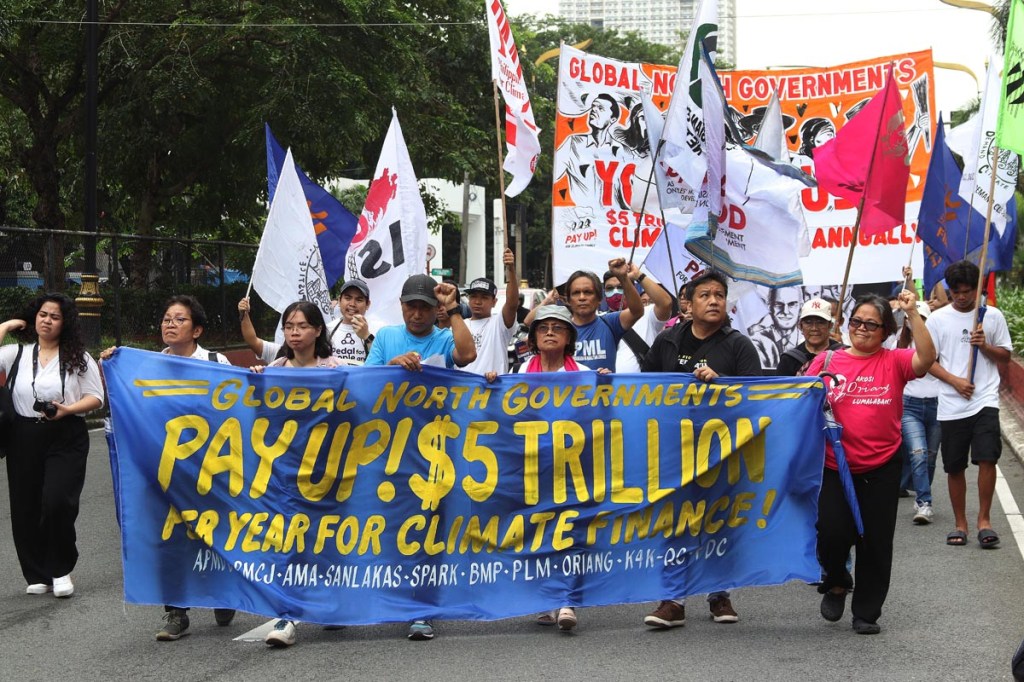
“2024 has been a devastating year for those at the frontlines of the climate crisis,” says APMDD coordinator Lidy Nacpil. Extreme heat in South and Southeast Asia in the first half of the year has closed schools, disrupted food production, and collapsed power grids. In southern Pakistan, 568 people died in six days due to heat stroke. In the second half of the year, the monsoon rains, exacerbated by the climate change, have given Bangladesh its heaviest rainfall an worst flooding in over a century, leaving millions of people stranded and damaging $282 million worth of crops. In the Philippines, the Department of Agriculture disclosed that this year’s El Niño has cost 9.5 billion pesos in losses, devastating over 175,000 farmers and fisherfolk. “This year’s extreme weather events remind us that the most vulnerable people in the Global South pay the heaviest price for climate change despite contributing the least to global emissions,” Nacpil says.


“The US is the biggest historical either of greenhouse gasses, making their elites, corporations, and government most responsible for the climate crisis,” says labor leader Luke Espiritu, president of Buklurang Manggagawang Pilipino (BMP). “The US and other rich countries have an obligation to cover the costs of mitigation, adaptation, loss and damage, and ensuring a just transition in the Global South. If they can’t deliver an adequate amount of climate finance, injustice will prevail and people in the Global South will suffer the most from climate crisis.”

Under the UN Framework Convention on Climate Change (UNFCCC), developed countries agreed to provide climate finance to cover the costs of developing countries’ climate programs and projects. The target amount of climate finance that must be raised for the Global South will be a main agenda item at COP29 in November. COP29 is expected to set the new collective quantified goal (NCQG) for climate finance, which will replace the previous goal of $100 billion a year, which has already been criticized as inadequate.
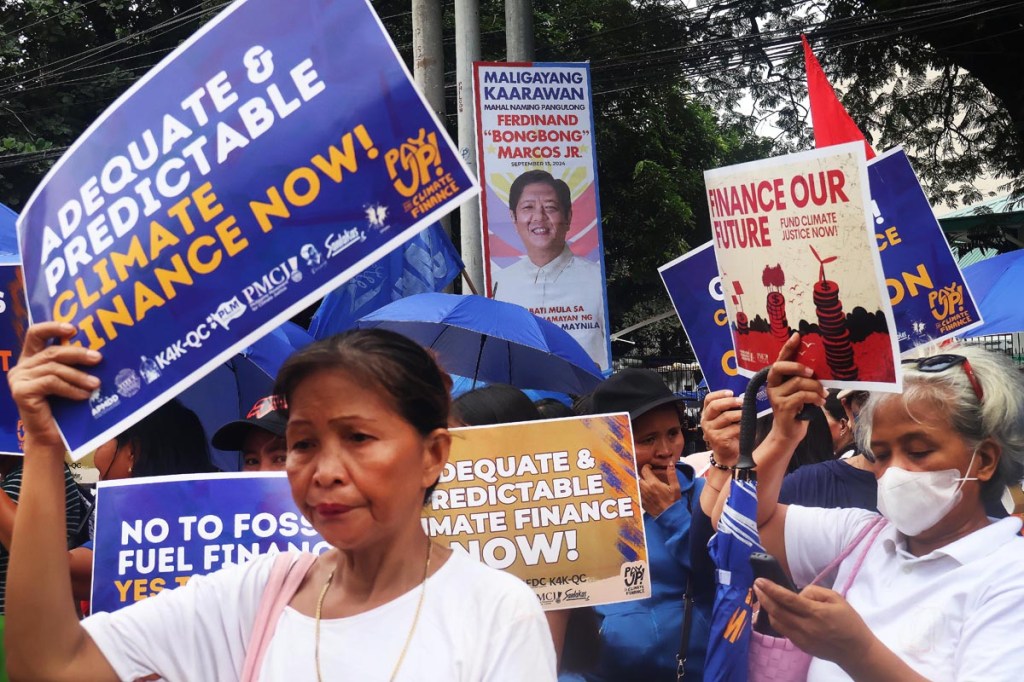
According to Nacpil: “An adequate amount of climate finance for developing countries is estimated to cost at least $5 trillion a year. While this figure might seem high, studies show it’s actually a conservative estimate of the needs of developing countries.” The UNFCCC’s first Needs of Determination Report, released in 2021, estimated that the cost of mitigation and adaptation would be $5.9 to $11.4 trillion until 2030. But this amount represents the cost of only 26% of the needs of 24 countries, meaning the real cost of mitigation and adaptation is much higher. This figure also excludes economic loss and damage, which is estimated to cost 447-894 billion per year by 2030.
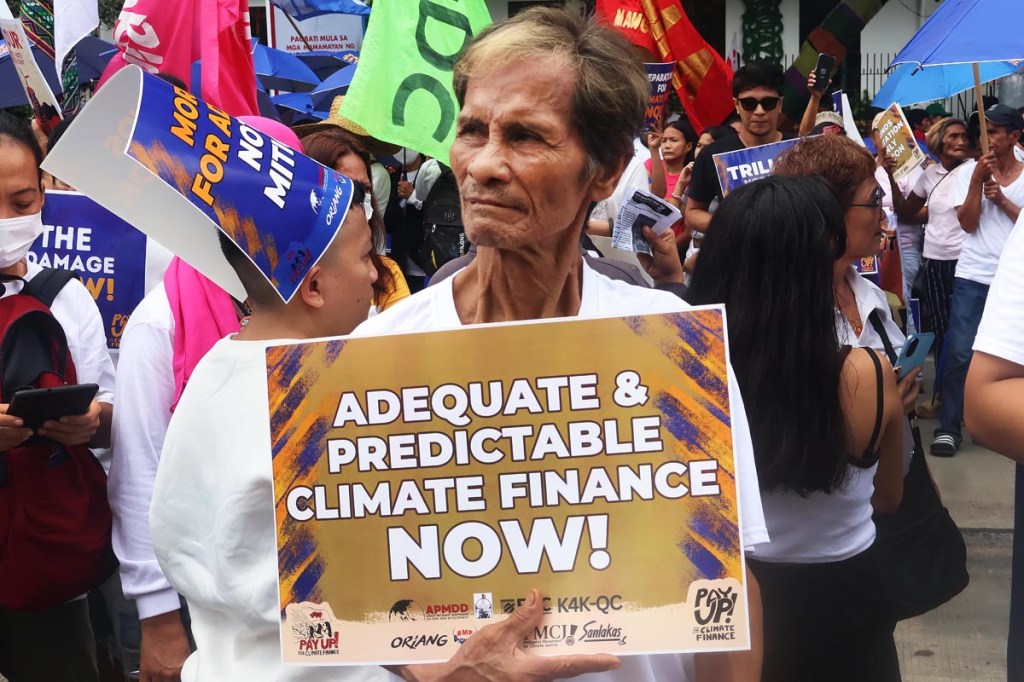


Earlier this year, US treasury secretary Janet Yellen said that “no less than $3 trillion annually” would be needed to fight climate change, but implied that this amount would be heavily channeled through multilateral development banks. Recently, the Asian Development Bank announced that 50% of its annual lending would be devoted to climate finance by 2030. Global South movements reiterate that climate finance should be paid through grants, not loans that will only increase the debt burdens of already poor countries, and delivered free of conditionalities. Nacpil adds: “Not only does it violate the principle of historical responsibility to deliver climate finance through loans, it is deeply unjust to force poor countries to go into debt to address climate change. It is not enough that the amount of climate finance is adequate-it should also be public, non-deb-creating, unconditionally delivered, and new and additional to other financial obligations of developed countries.”
PRESS RELEASE
September 20, 2024
 Mata: Asia Press Photo
Leave a comment