
Agriculture is the backbone of the local economy and food production in the country, especially with rice as the main crop in the agricultural landscape. Although farmers face problems with climate change, variable market prices, and a lack of access to modern techniques, their hard work shines through. Many uses traditional methods and increasingly integrate sustainable agricultural techniques to enhance, yield, and protect the environment. This glimpse into the everyday lives of farmers is a reminder of their hard work, something that often goes unnoticed in urban settings today.
Having grown up in Cavite province south of Manila, I only get to visit my father’s hometown in San Clemente, Tarlac Province, north of Manila, a few times. Luckily, I had the chance to see and spend some time there. What struck me the most was the extreme dedication of the local farmers, who pour their heart and soul into their work, no matter how big or small the struggles are. It made me realize their importance in meeting everyone’s basic needs. Witnessing it firsthand was eye-opening. It reminded me that everything in life involves a process, whether simple or hard work.
Farmers often need help to get their stories told, which tends to focus more on urban perspectives. They are often referred to as a default symbol for the most marginalized group in the Philippines. This gap leaves the city dwellers on one hand and the rural-life experiences between the real farmers in the various rural settings on the other. Agricultural media coverage tends to be more sensational in nature or have negative portrayals such as low farm incomes and the increase of technology, outshining the genuine voices and daily truths of farmers. Every story is unique for different farmers and remains unheard due to a lack of proper representation.
This forces invisibility for farmers, whose stories and societal contributions go unrecognized in the broader cultural discourse. As a result, the essential role of farmers in food production and community sustenance is often overlooked, whereas there is more need for inclusive representation in media and photography.
Below are the photos I captured showcasing various farming activities in Tarlac. This advocates that the experience, and not the process but the daily routines and experiences of the farmers are worthy of representation.
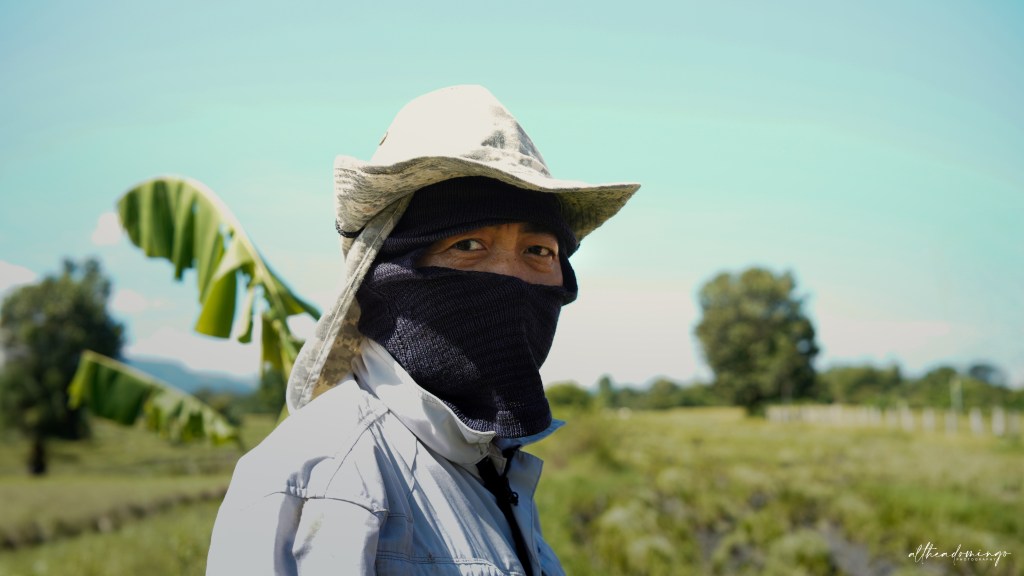
He is Kuya Darwin. He told me how important it is to guide his fellow farmers, despite his work as a seaman, especially since agriculture can be tough. He says that collaboration is key to success. He also likes to be hands-on, wanting to see things unfold to ensure everything runs smoothly. He also shares knowledge and resources to help farmers thrive, particularly during challenging economic times.

This picture was taken in a secluded place where a traditional and rusty rice thresher works. A group of farmers was working together, each on their task: adjusting the speed of the thresher, swapping sacks, and passing along the sacks that had been filled. Their roles not only made the process of harvesting faster but also the importance of their teamwork.
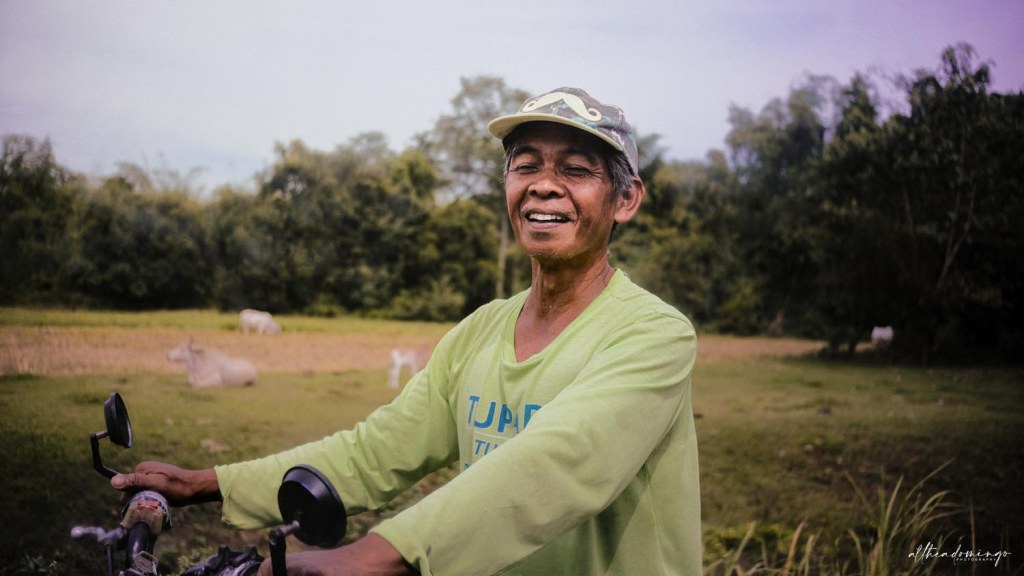
This photograph was taken while I was inside the car as another farmer passed by. He was grinning with joy even though it was a hot day and was going to multiple locations at once. When I asked him where he was going, he said that he was going home after a busy day in the fields.
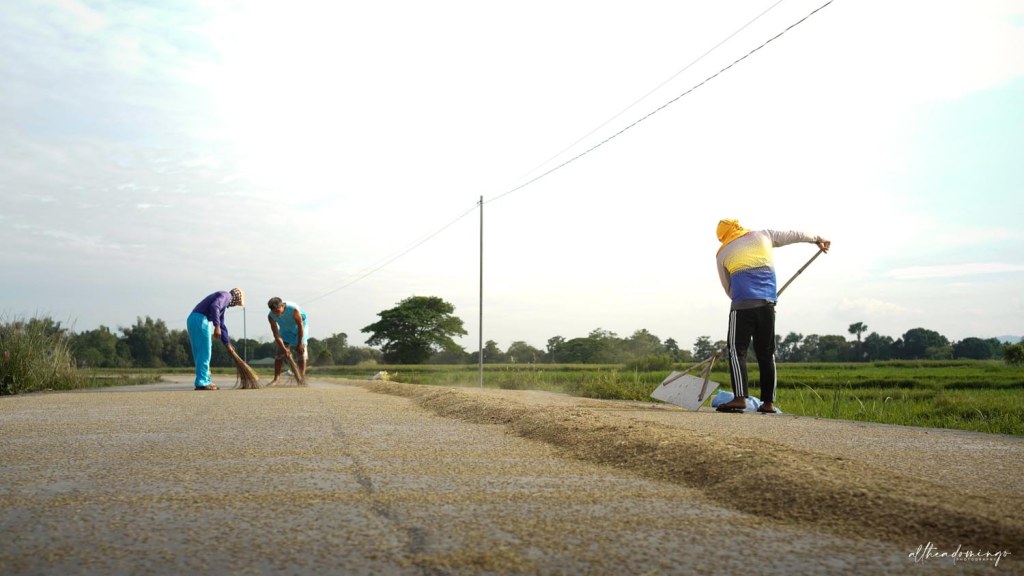

Grain drying is one of the major post-harvest activities that remove excess moisture from harvested grains.
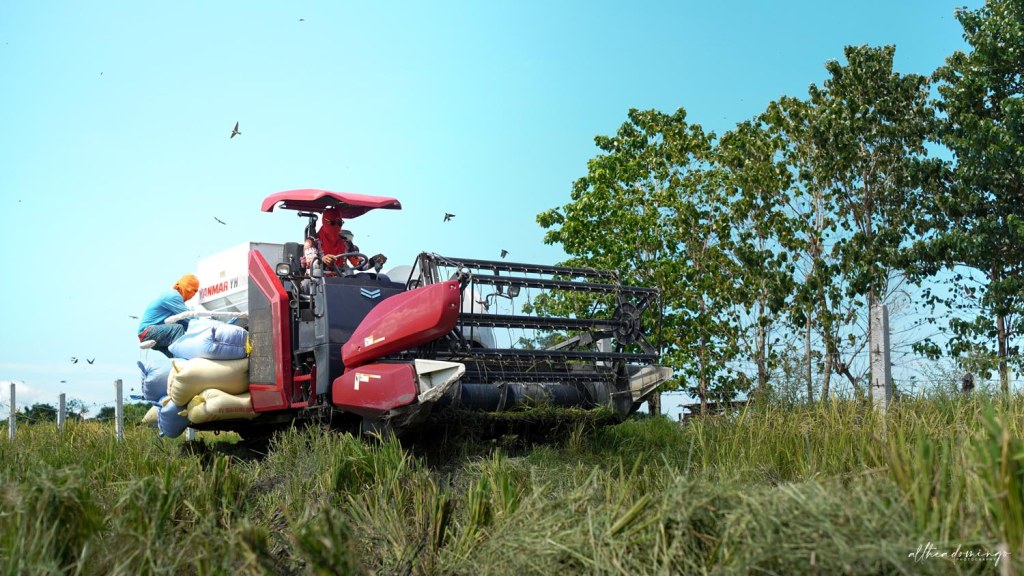
I woke up at 5:30 am to get ready for the harvest. As I made my way along the pilapil, I snapped a photo of the harvester and a flock of birds soaring overhead.
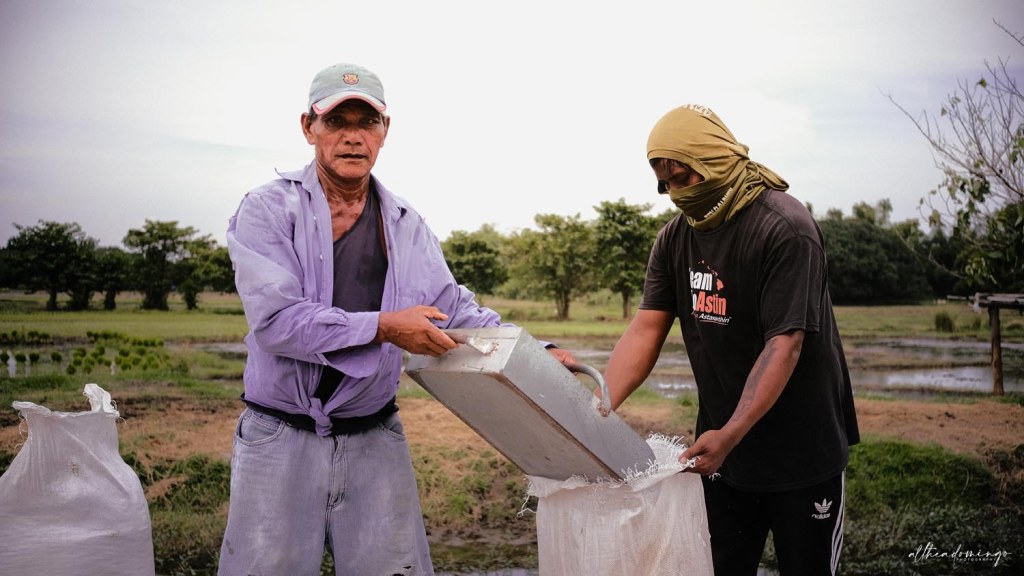
These are the grains that the harvester collected and here’s Uncle Maxie, whom I always coincidentally end up taking pictures of since he’s literally everywhere during all farming processes.
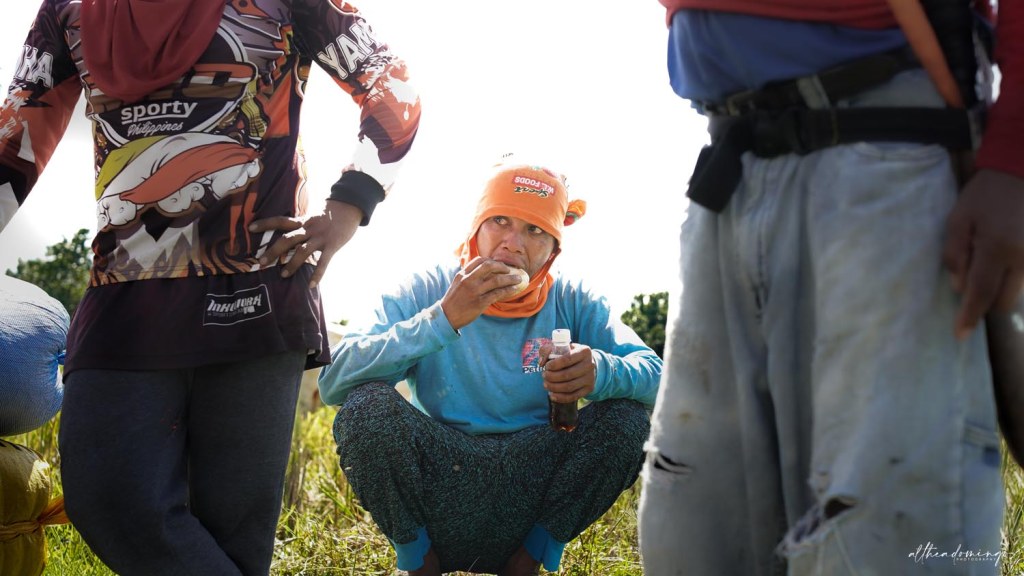
Early in the morning the farmers were fed an afternoon snack at the start of their day of harvest. The owner said this was because of the fatigue they usually feel and the dehydration from being out in the sun.

Rice planting here is entirely traditional and by hand. It requires patience and perseverance because workers ensure they are evenly distributed.
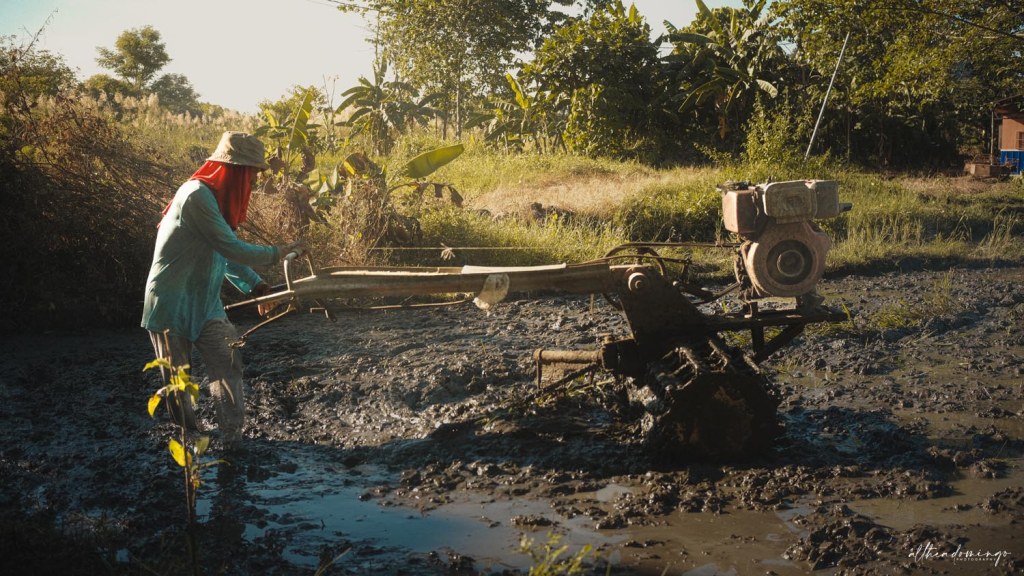
A tractor has aided the way farmers work in the fields and made their tasks much lighter and more manageable. They would no longer have to spend hours working manually because tractors can do all the heavy work. This not only saves them time but also reduces the physical strain with their bodies.
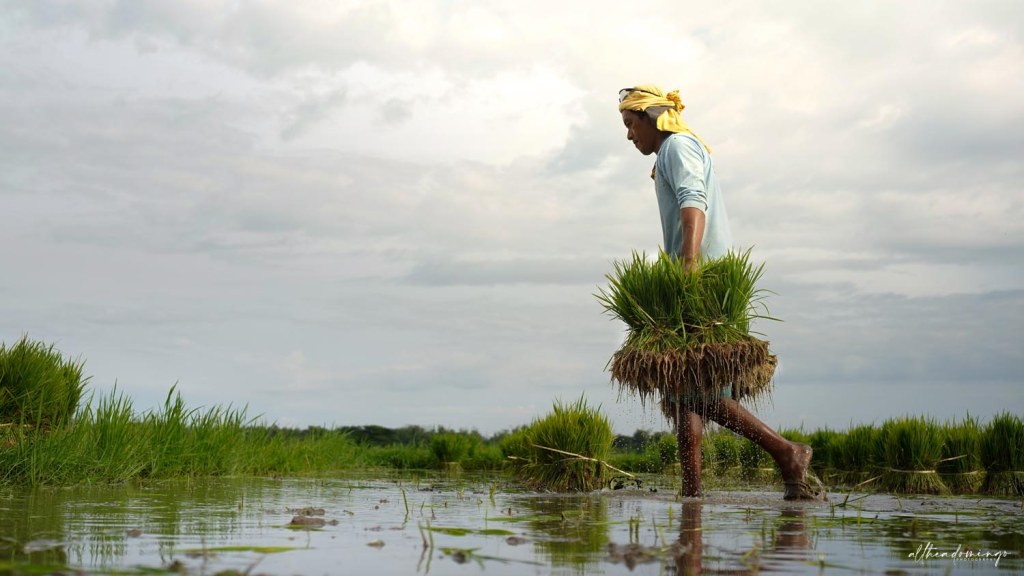

“Ang hirap magtanim no? Tapos yung iba sinasayang lang yung kanin,” the farmer told me. At that moment, it hit me just how much effort goes into every grain of rice on our tables. Each meal represents countless hours of hard work and dedication. It made me appreciate not just the food I eat but also the process it takes to get there.
Most of the people I spoke to mention the hardship that characterizes farm life. Such photos always remind me of the lives of the real realities these farmers face in rural setups. This exhibition is helpful because it allows the presentation of the farmers’ reality in photographic frames. Such photos tell an extended story to recognize farmers’ lives and the work that goes with it, in particular, as an essential force in our society.
Thinking photographically, Voices from the Land allows viewers to consume what the photographs are talking about, and this is the everyday realities of farmers. This serves to be a platform for different stories to gain wider visibility so that audiences will be able to grasp their realities in a deeper and meaningful way. While farmers may appear to be accessible figures in society, this perception often reflects how they are treated and viewed, highlighting the need for connection and a more nuanced understanding of their lives and challenges.

 Mata: Asia Press Photo
Leave a comment