

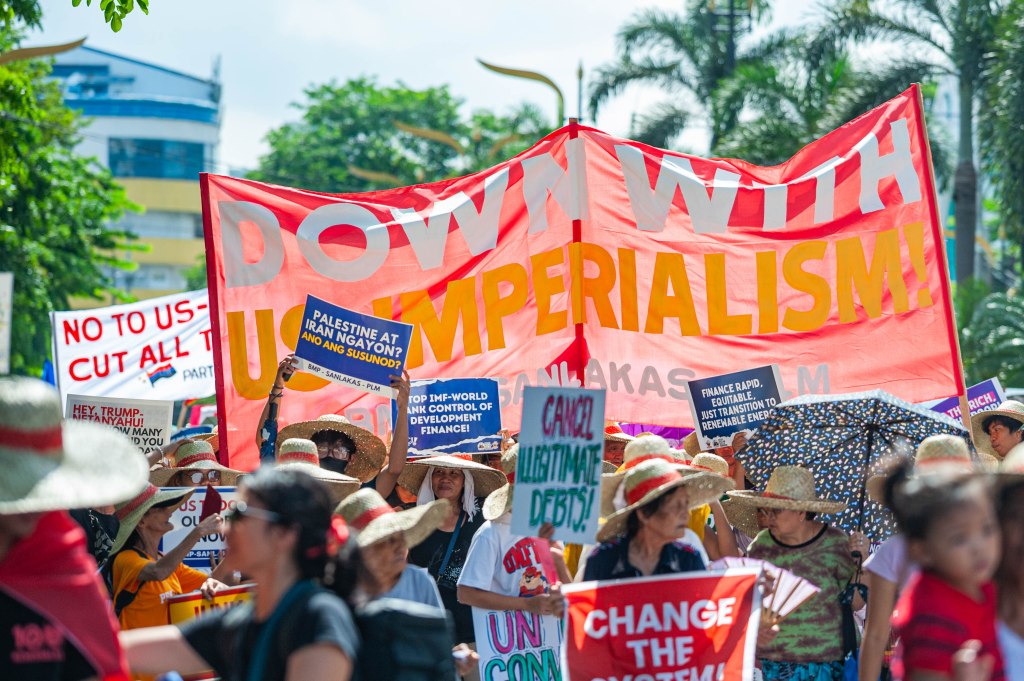
Spearheaded by the Asian Peoples’ Movement on Debt and Development (APMDD), members of various economic, finance, and climate justice organizations, hold a protest march along Kalaw Avenue in Manila on June 27, 2025.
The demonstration calls for urgent and sweeping reforms to the global financial and economic systems ahead of the United Nations 4th International Conference on Financing for Development (FFD4), set to take place in Sevilla, Spain, from June 30 to July 3.
The march is part of a coordinated wave of protests across Asia, Europe, Africa, North America, and Latin America, amplifying the call for fairer financing for the Global South.
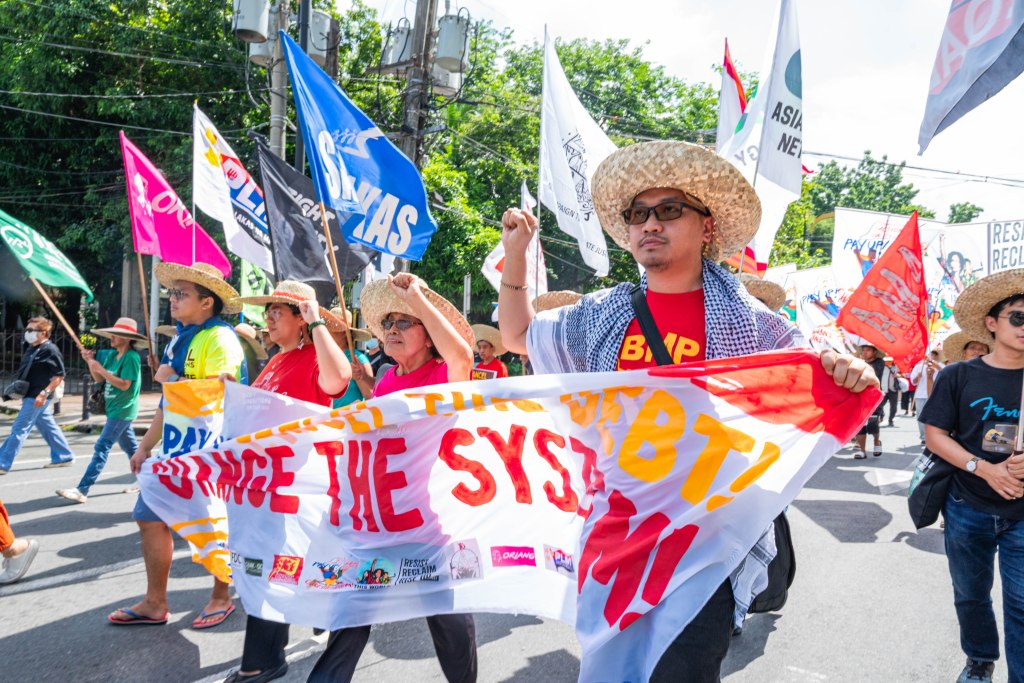


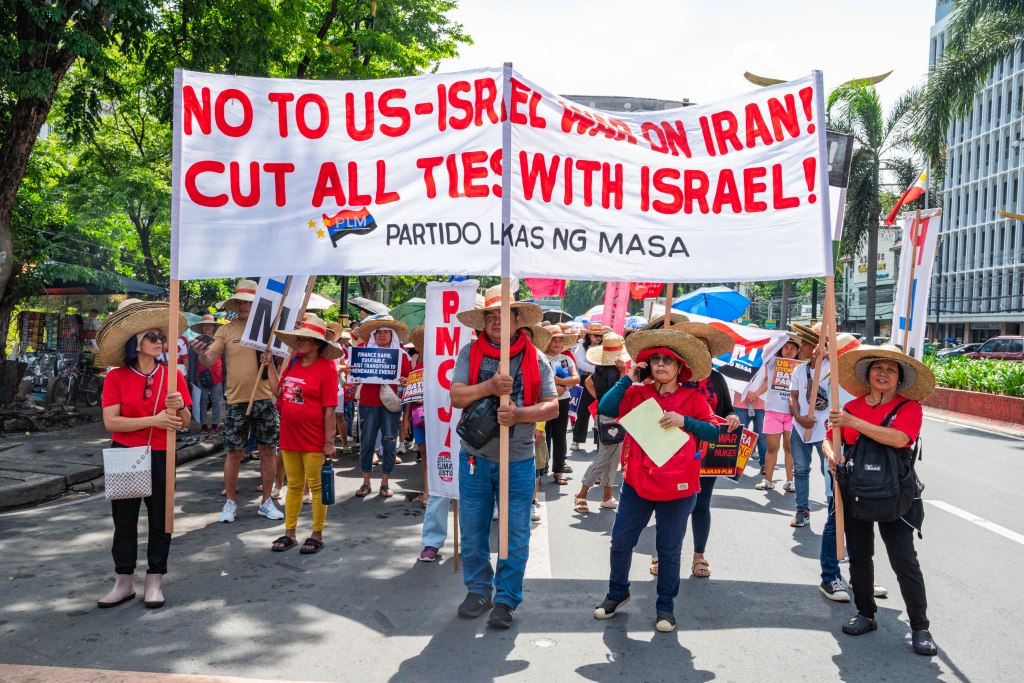
They were blocked by police on their way to the US Embassy.
A statement released to the media by APMDD said:
“According to the OECD, the gap between development financing needs and available resources will rise to USD 6.4 trillion by 2030 without a drastic overhaul of the global financial system. The global actions called for wealth taxes to generate revenue and debt cancellation to free up fiscal space. Protestors also called on the governments of rich countries to deliver climate finance to developing countries, as economic losses induced by climate change exhaust their public funds. Since 2015, development finance needs have risen by 36%, partly due to the impacts of the climate crisis.
The FFD4 also presents a historic opportunity to continue pushing for democratic debt governance through a UN Debt Convention, away from decision-making spaces dominated by the IMF, the World Bank, and Global North lenders. Although the US, UK, EU, Japan, Switzerland and other Global North countries blocked the path in the negotiations to achieve this measure, the fight continues as civil society mounts global protests against a broken and unjust financial architecture that has led to the accumulation of unsustainable and illegitimate debts. This year, debt service payments will cost the Philippines up to PHP 877 billion, or 13.8% of the national budget.”
“Our world needs a massive transfer of resources from the rich to the poor, from North to South, and taxation is one of the most direct and transparent tools we have to make this happen. Taxing excessive wealth and ending tax abuse aren’t just about generating revenue for development, it’s about redistributive justice,” said Luke Espiritu, labor leader and president of Bukluran ng Manggagawang Pilipino (BMP). He added that increasing taxes on elites and corporations should not be seen as permission to continue economic injustice: “These taxes must be accompanied by structural change that will facilitate the end of excessive wealth accumulation and profiteering.”
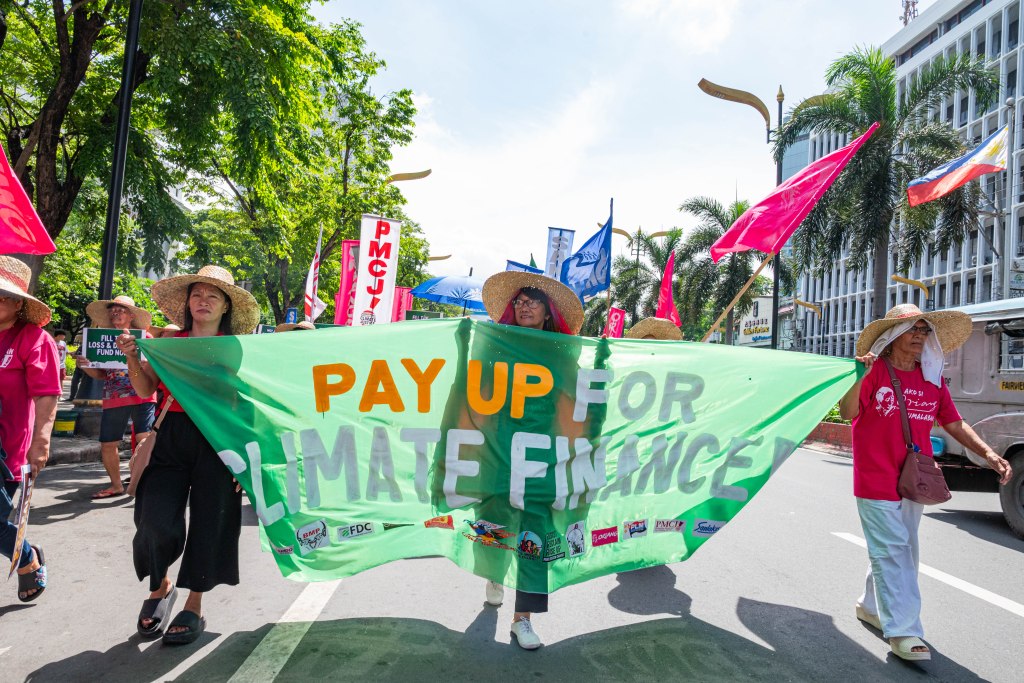


Rovik Obanil, secretary general of the Freedom from Debt Coalition (FDC), said: “The Philippines is one of many developing countries caught in a worsening debt crisis, with no end in sight as lenders push debt as the solution to many problems, from economic downturns to climate change. The problem of debt accumulation is systemic and demands no less than a systemic solution, which is an overhaul of the international financial system. Establishing a UN Debt Convention is a key step in that direction”
“Southern governments are also complicit in implementing onerous debt conditionalities, and urged the Philippine government to stop paying “illegitimate debts” such as debts bankrolling fossil fuel projects,” he added.
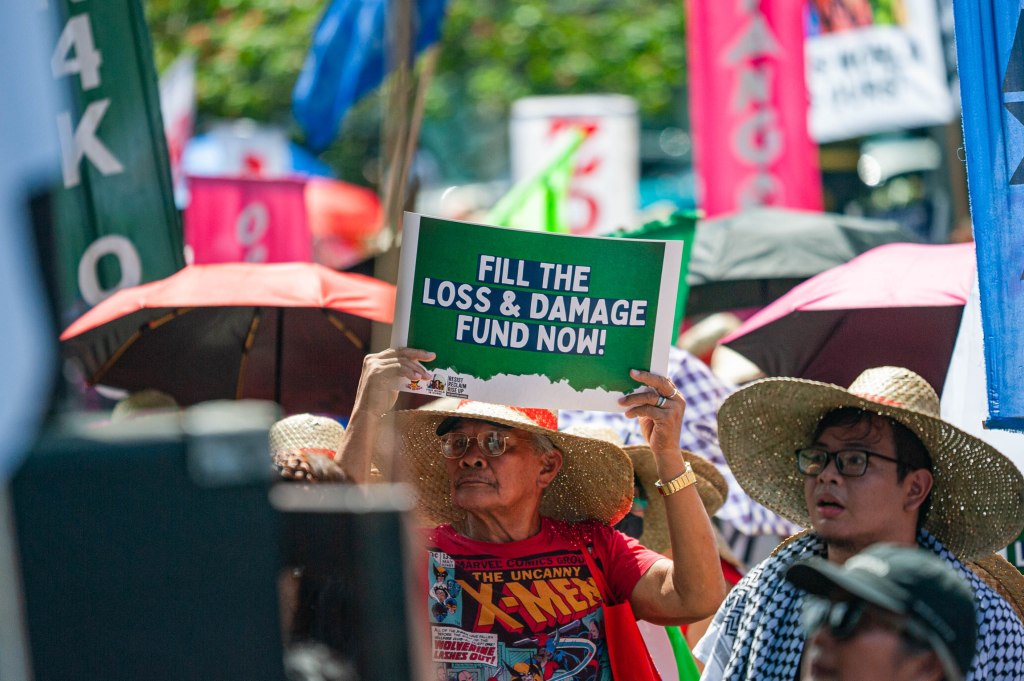
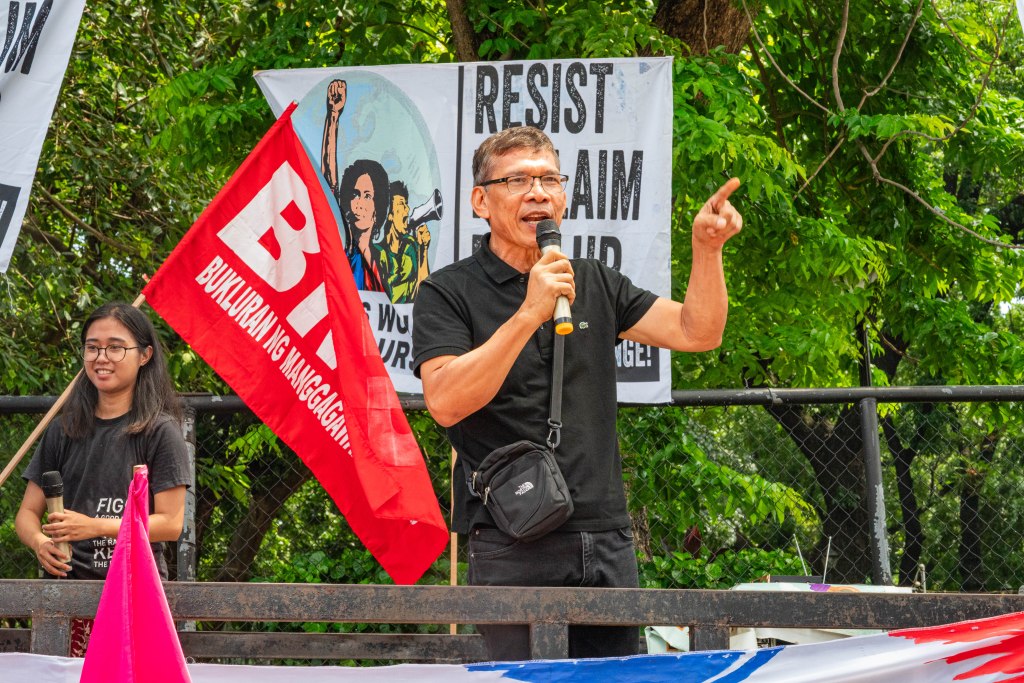

Climate activist and APMDD coordinator Lidy Nacpil said “the people of the Global South have suffered enough injustice at the hands of the Global North.”
She asked: “Why should the Filipino people pay the price for climate change, when we and the people of other Global South countries have done so little to cause it?”

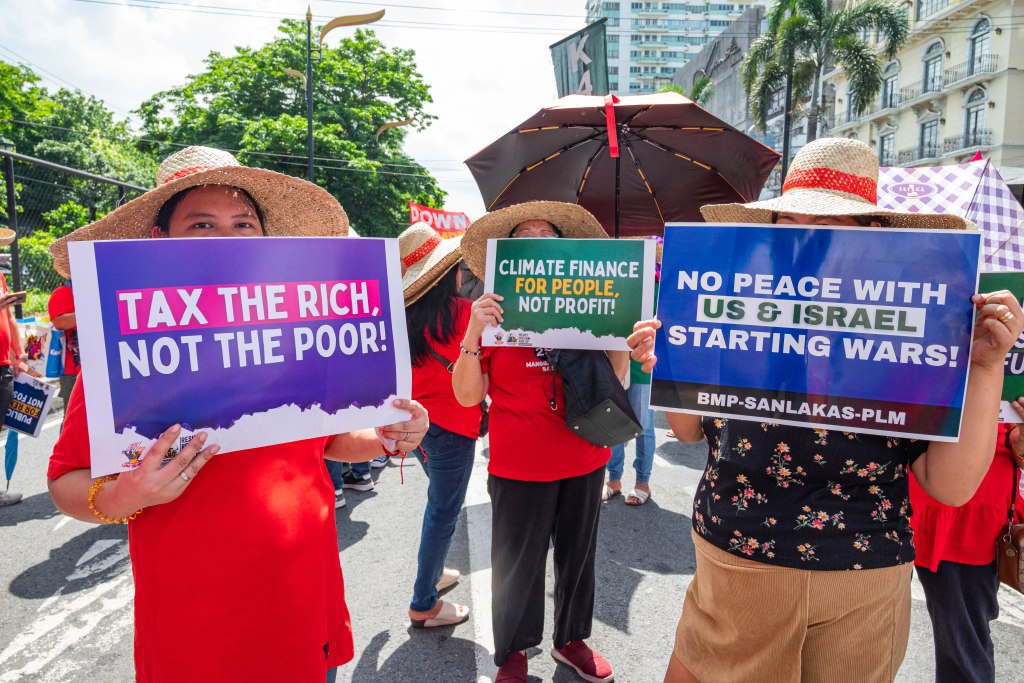
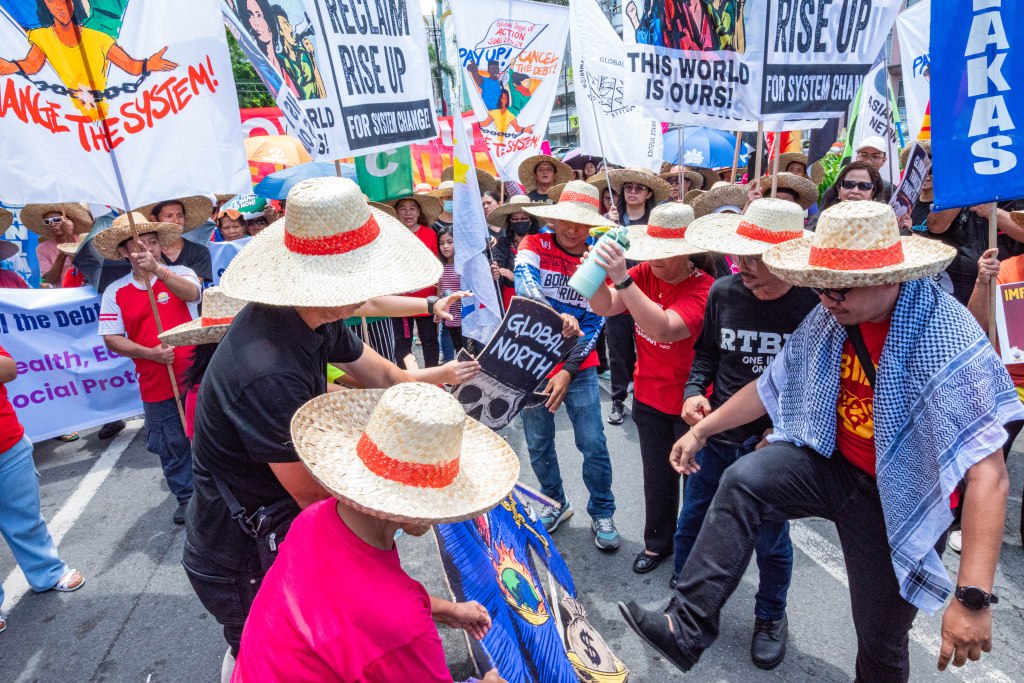
“Under the UN Climate Convention, Global North governments have an obligation to provide the Global South with trillions of public, unconditional, and non-debt-creating climate finance–yet they continually refuse to do so. Climate finance is a matter of survival for countries like ours, and we are here to demand the reparations we are rightfully owed.” she added. (Photos by Kenosis Yap / Mata: Asia Press Photo)
 Mata: Asia Press Photo
Leave a comment