Before the Water Rises: Daraitan’s Life and Resistance in the Heart of Sierra Madre
Mata Asia Press Photo
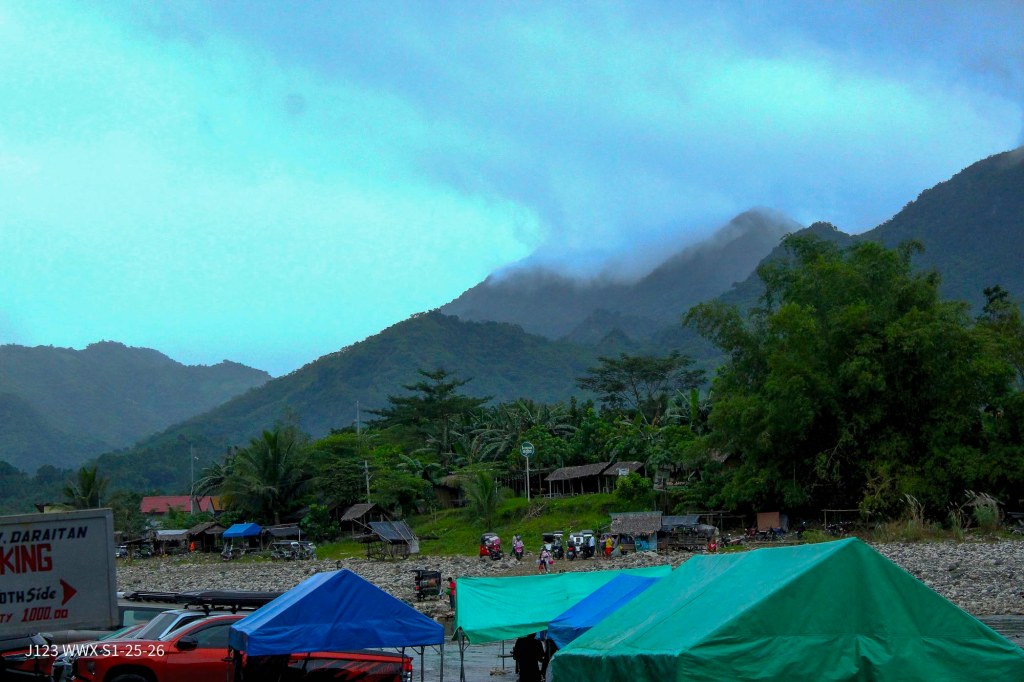
Situated in the Sierra Madre Mountain Range, Brgy. Daraitan in Tanay, Rizal, is home to a community deeply rooted and connected in nature, ancestry, and collective identity. One of the Philippine indigenous groups, the Dumagat-Remontado community, serves as the guardian of the ancestral lands that sustain both their livelihood and culture. Now, their ancestral lands face the threat of eradication due to the controversial Kaliwa Dam project.
The Kaliwa Dam is a large-scale infrastructure project intended to address Metro Manila’s water shortage by harnessing water from the Kaliwa River, which runs through parts of Quezon and Rizal provinces. If completed, the project is expected to create a massive reservoir that would inundate portions of Brgy. Daraitan and surrounding areas, directly affecting Indigenous communities, homes, schools, farms, and sacred sites within the Sierra Madre.
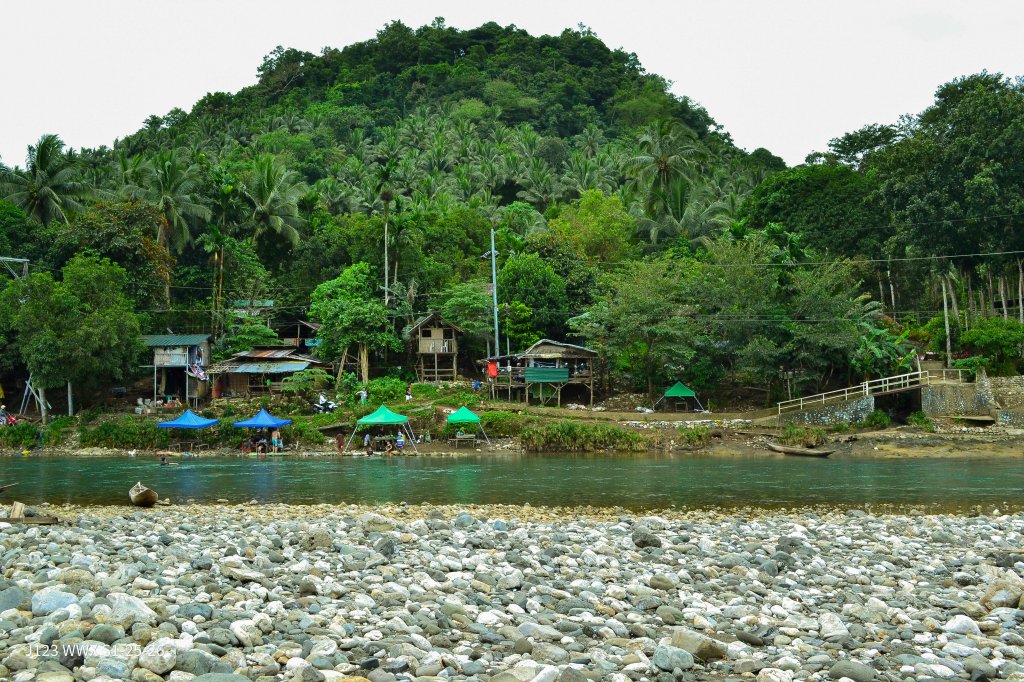
The Daraitan River flows through the Dumagat-Remontado community in Brgy. Daraitan, Tanay, Rizal. It serves as a vital passage and lifeline for residents, linking homes, livelihoods, and the surrounding Sierra Madre mountain range. Photo by Victoria Del Carmen.
Despite the looming threat of the development of the Kaliwa Dam and the unprecedented changes brought by the influx of tourists and resettlers, the Dumagat and Dumagat-Remontado continue to thrive in Daraitan. Their lifestyle reflects a balance between tradition and modernity. Some katutubo live farther down the river as farmers and fishermen, while have settled closer to the town proper, where they have taken up jobs in small businesses and assumed positions in the local government.
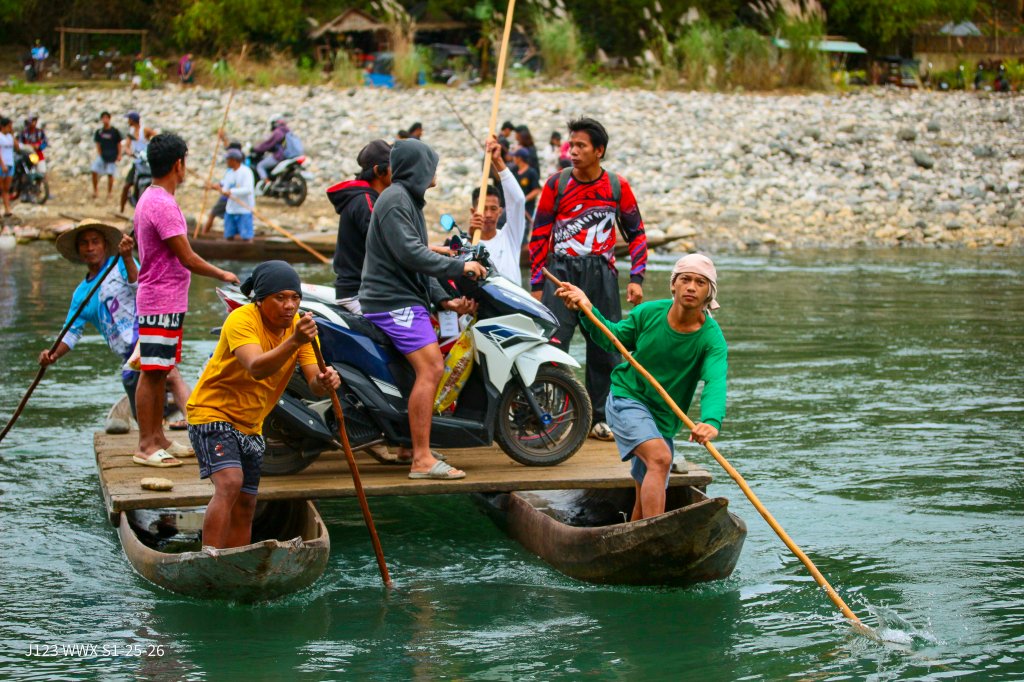
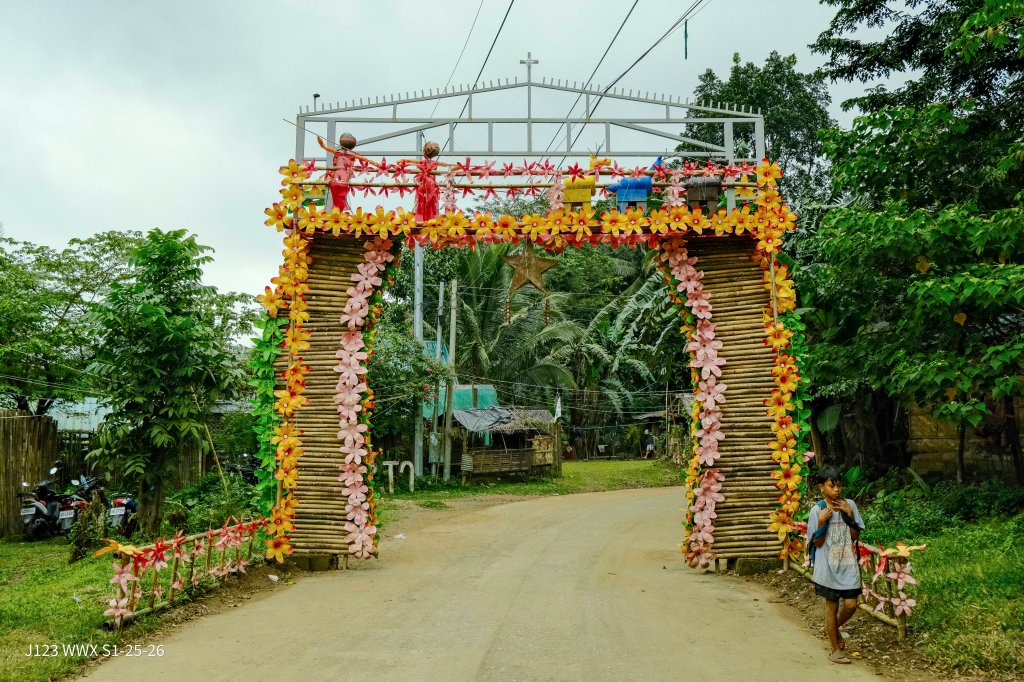
Four boatmen use bamboo poles to maneuver a long wooden raft carrying residents and a motorcycle across the Daraitian River. As the primary gateway into the community, the river crossing bridges the Dumagat-Remontado ancestral lands in the Sierra Madre to the town proper for trade and daily travel. Photo by Tasha Baquir.The Dumagat-Remontado community greets residents and visitors with an arch intricately decorated with stacked bamboo, flowers, and ornaments made from recycled materials. Atop the arch are figures of people in welcoming gestures alongside animals, reflecting the community’s connection to nature and communal life. Photo by Sophia Pangandian.
Fishing and farming remain the central means of survival in Daraitan. Guided by ancestral knowledge passed down through generations, the Dumagat and Dumagat-Remontado cultivated their agricultural practices in land and sea with deep respect for nature.
However, the construction of the Kaliwa Dam threatens to submerge their farmlands, rivers, and sacred sites. It may force families to leave their ancestral land, destroy food sources, and weaken their way of life. Such displacement risks erasing traditions that sustain both their livelihoods and cultural identity.
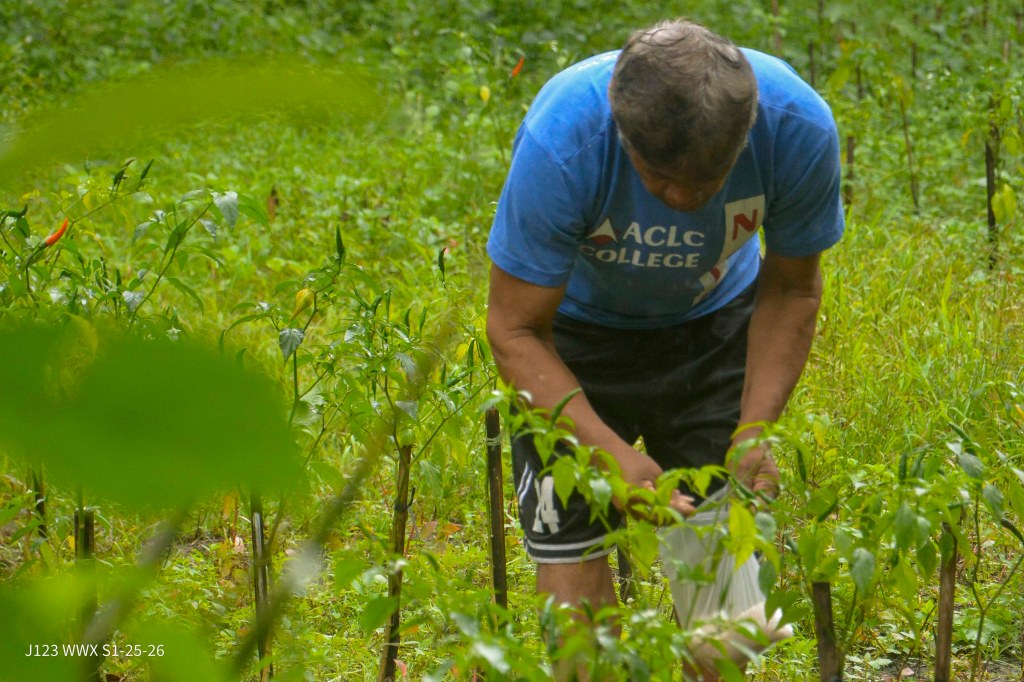
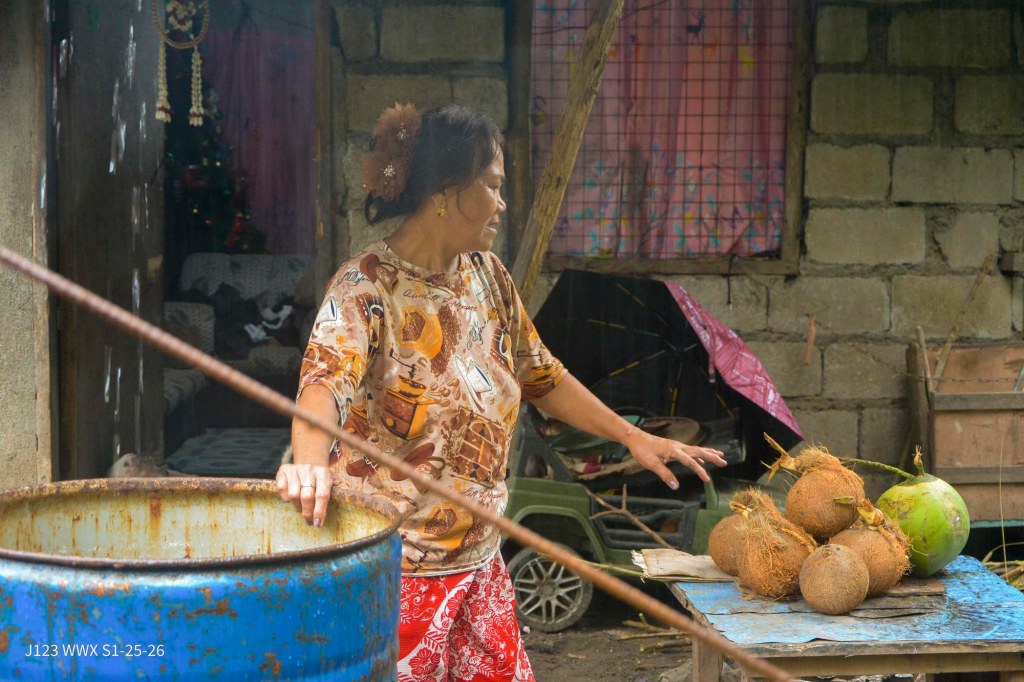
Jeremy, a Dumagat-Remontado, tends to his chili plants by putting fertilizer by hand. He later sells the harvest for 400 pesos per kilo, making each careful step to sustain his livelihood, tradition, and close relationship with the land. Photo by Helena Cos.Ate Marijoy demonstrates how she gathers her coconut harvest. Amid simple tools and freshly-picked coconuts, she shares practical knowledge rooted in experience, daily labor, and the rhythms of community life. Photo by Helena Cos.
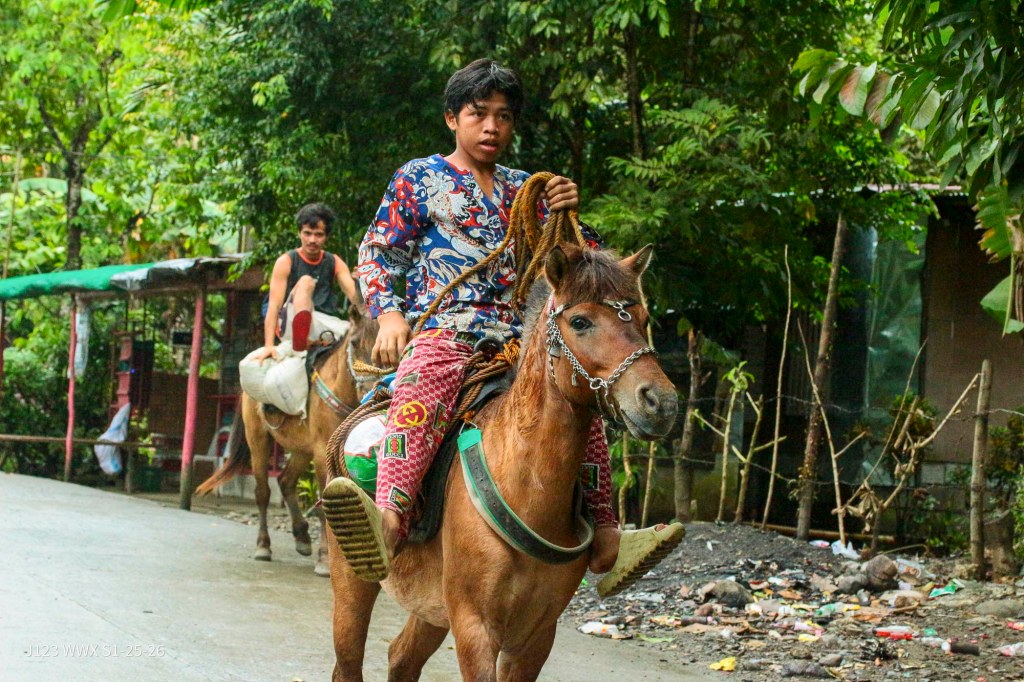
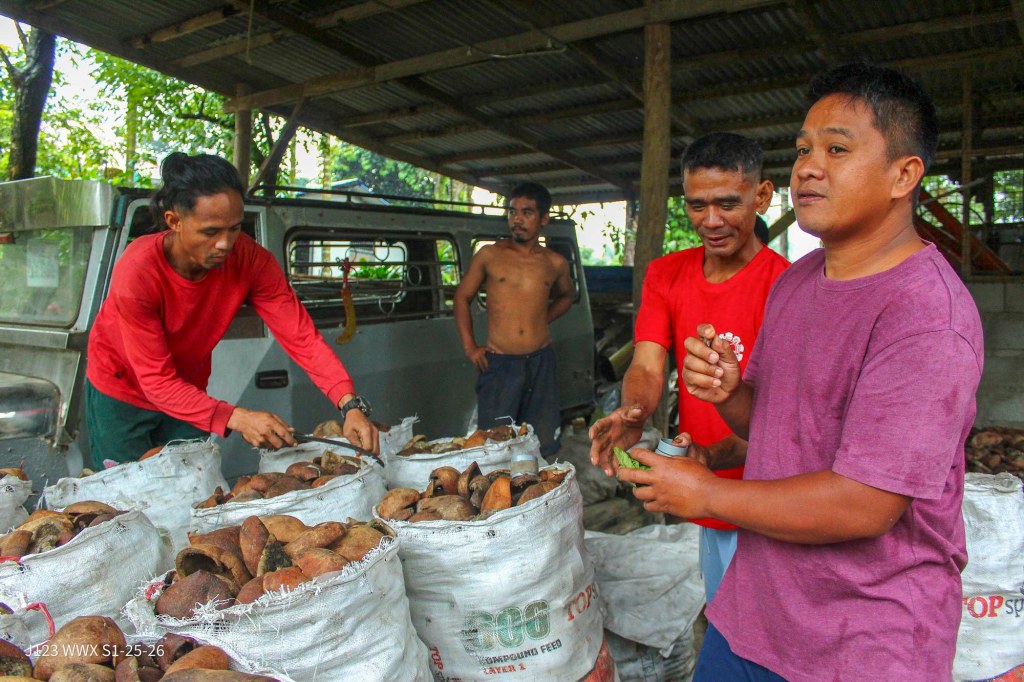
Deeply connected with the land’s natural resources, their way of life extends to the steep mountain trails, where commerce moves at the pace of small caravans of men and horses. Bridging the remote upland farms to the village, some travel hour-long treks hauling 200 kgs of goods such as copra and vegetables. This labor provides the only means to transport the harvest from the mountains to the market.
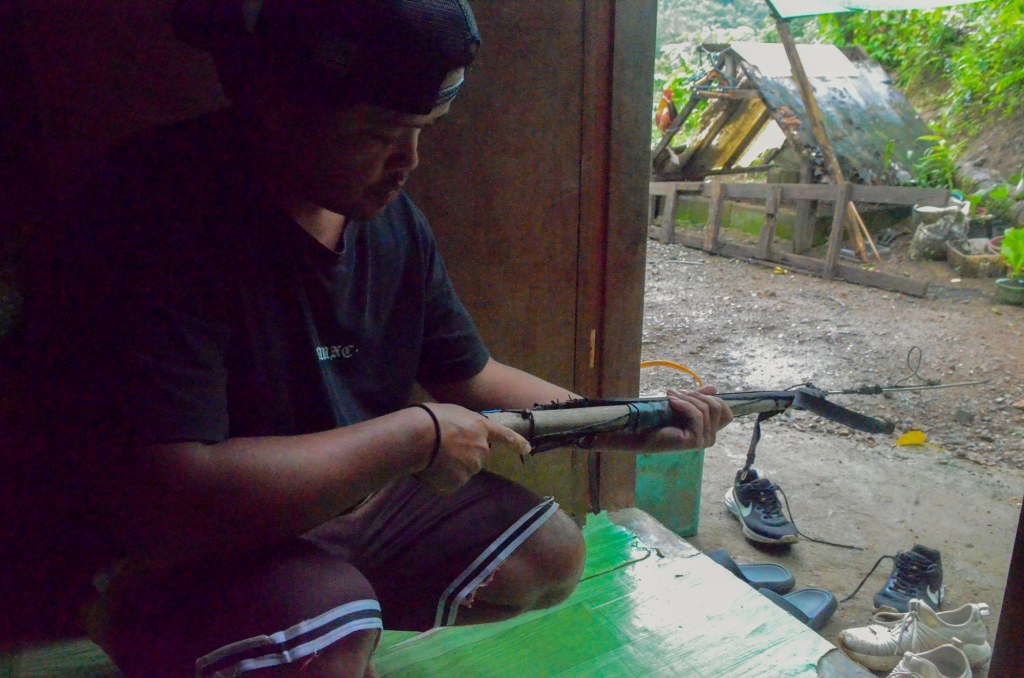
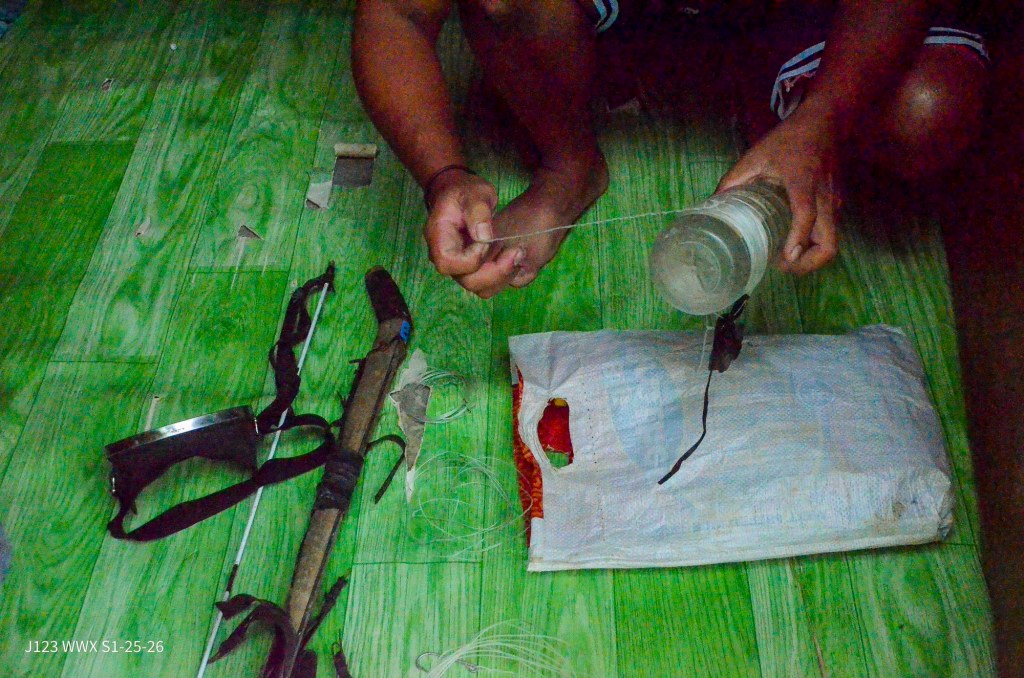
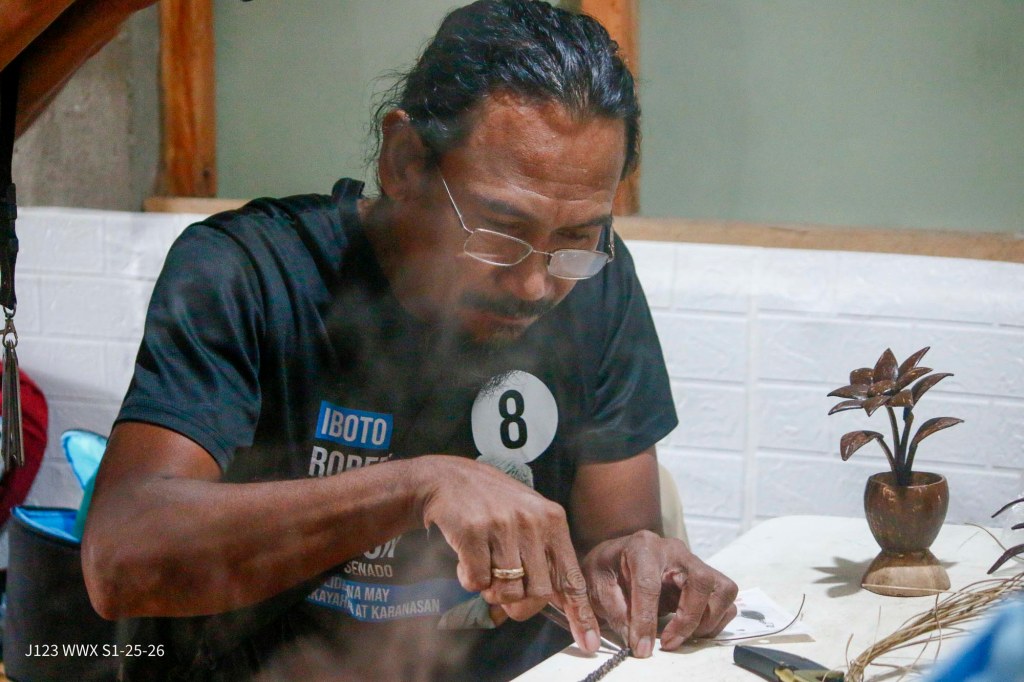
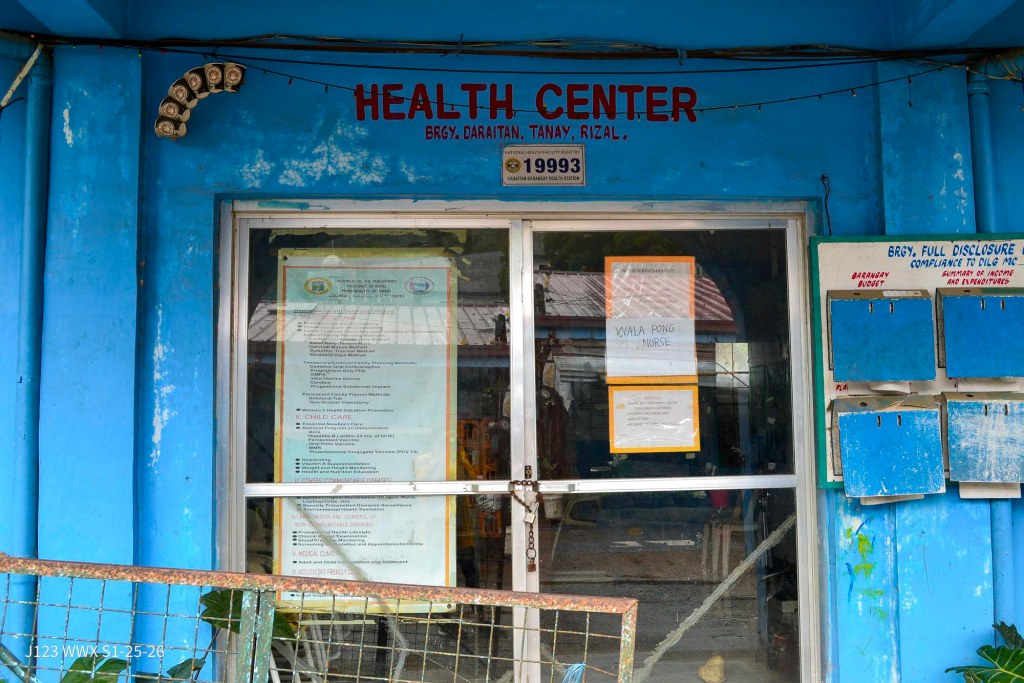
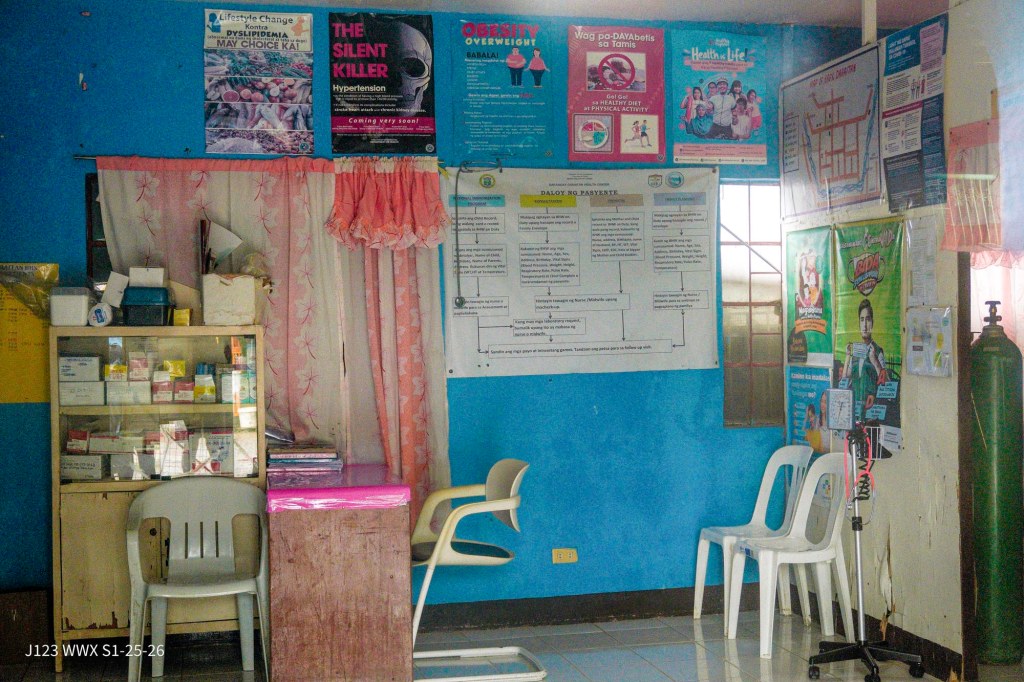
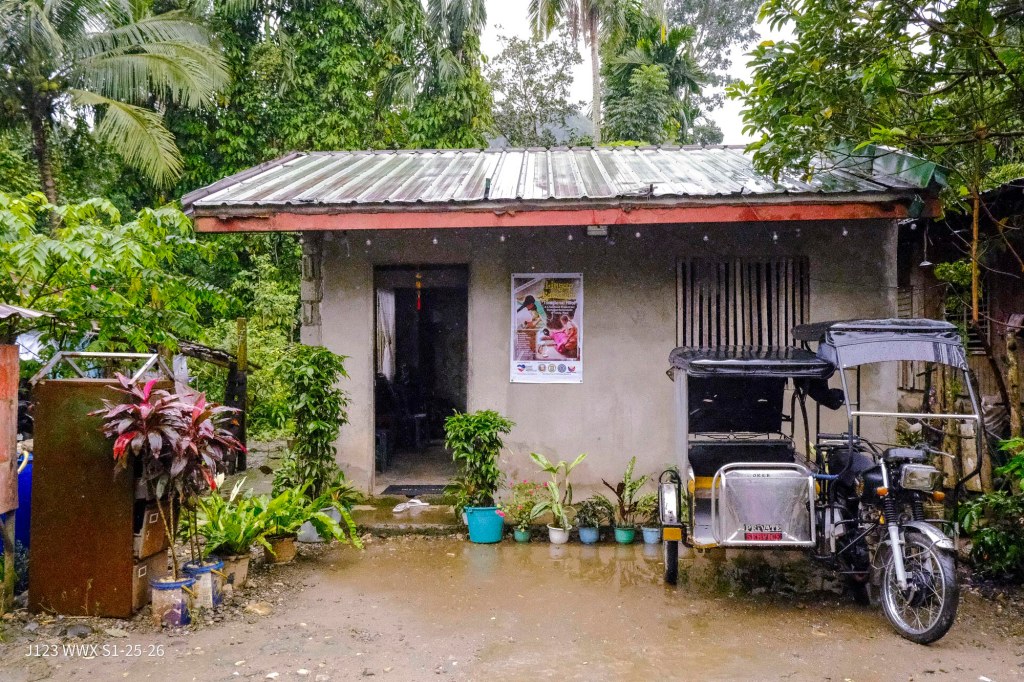
Randy and Gerald Dela Cruz ride their horses back to the mountains after delivering goods. Horses are indispensable in their community, carrying up to 200 kilos of copra and vegetables down steep trails, with riders earning just four pesos per kilo for hauling heavy cargo to market. Photo by Tasha Baquir.Koprahan workers in Daraitan explain the process of turning copra/kopra, the collected dried coconut meat, into various products such as coconut oil. They carry and gather sacks of coconut shells all the way from General Nakar, Quezon, to transport to Laguna, where the copras will be processed. Photo by Janae Palingcod.Ber San Juan, a fisherman from Brgy. Daraitan, Tanay, Rizal, presents one of his night-fishing tools – a sharp, hand-thrown spear used when the Daraitan River turns calm, and fish become easier to spot. Nearly two decades into fishing, San Juan relies on this method during nighttime, when aquatic life surfaces and the still water allows them to hunt more efficiently. Photo by Hannah Tabunda.Up close, San Juan’s fishing kit reveals the practical tools behind the river fishing in Daraitan: diving goggles for night visibility and eye protection, a second spear, and a nylon line wound onto a plastic bottle. Drawn from his experience, these simple yet functional tools reflect his resourcefulness and deep familiarity with the calm waters of the Daraitan River. Photo by Hannah Tabunda.Renato Ibañez, fondly known as Ka Nato, a Dumagat–Remontado indigenous leader from Tanay, Rizal, carefully crafts a necklace made from coconut shells. Beyond his leadership work, Ka Nato engages in handicraft-making, selling his handmade necklaces to generate income in support of their community. Photo by Allyana Barquira.The Brgy. Daraitan Health Center is the community’s primary access to basic healthcare services for its residents. It provides maternal and child care, communicable disease surveillance, prevention and control of non-communicable diseases, general medical consultations, and adolescent-friendly health services. Photo by Victoria Del Carmen.The only health center serving the thousands of residents of Daraitan stands across the barangay hall. Despite the lack of nurses, it strives to provide immunization programs for children, consultations, prenatal care, and family planning services. Photo by Janna Cambri.
Access to healthcare in Daraitan remains limited. The barangay health center, located across the barangay hall, serves as the community’s sole facility for basic healthcare. Serving hundreds of families, yet it operates without a permanent nurse, leaving essential maternal, child, and general medical care limited and inadequately addressed.
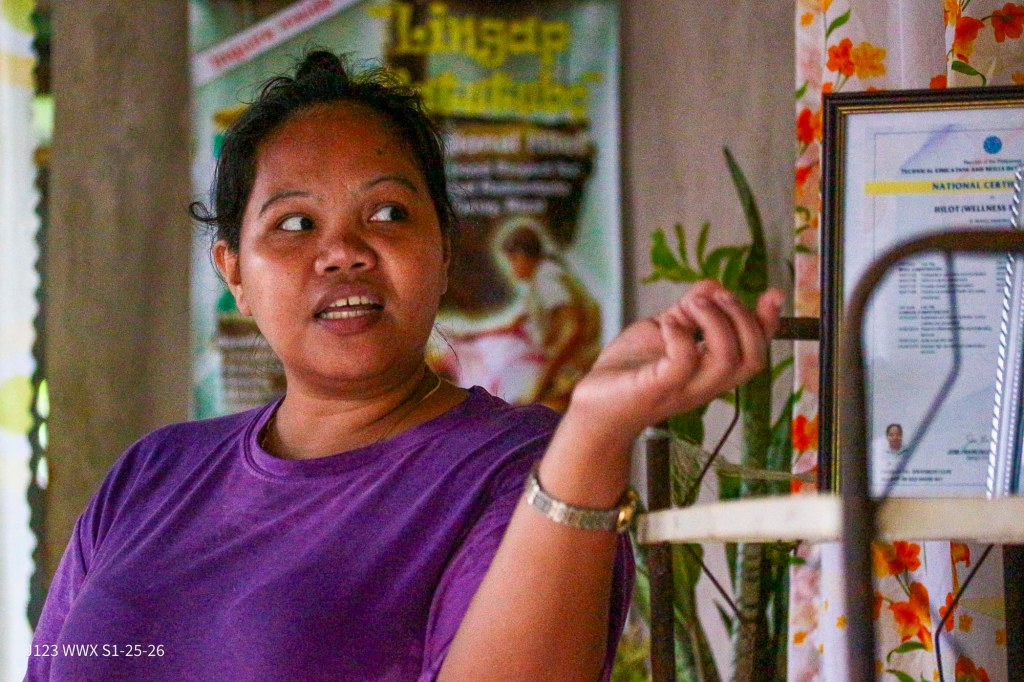
Traditional healing endures in the community through spaces like Lingap sa Katutubo, which offers services grounded in ancestral techniques. Photo by Sophia Pangandian.Michelle “Mitch” Pasion discusses the ancestral healing techniques she employs at her spa, Lingap sa Katutubo. Inherited from her Dumagat elders and refined through government training, Mitch utilizes native herbs found in the uplands and traditional hilot to cure ailments, preserving the tribe’s indigenous medical knowledge while providing a sustainable livelihood. Photo by Tasha Baquir.
Pasion trained in Manila, but returned to Daraitan due to the lack of accessible healthcare in the area. Serving as the primary responder for her neighbors, practicing and preserving hilot – a traditional form of healing, using ancestral knowledge and native herbs. Through her work, healthcare remains available in the uplands where formal medical services are scarce.
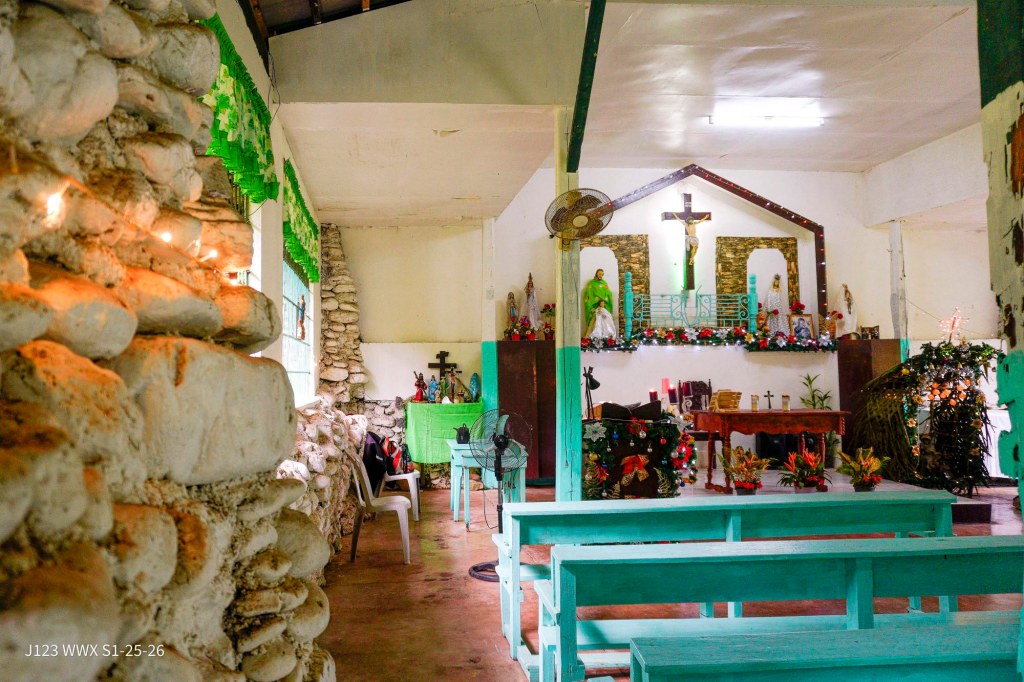
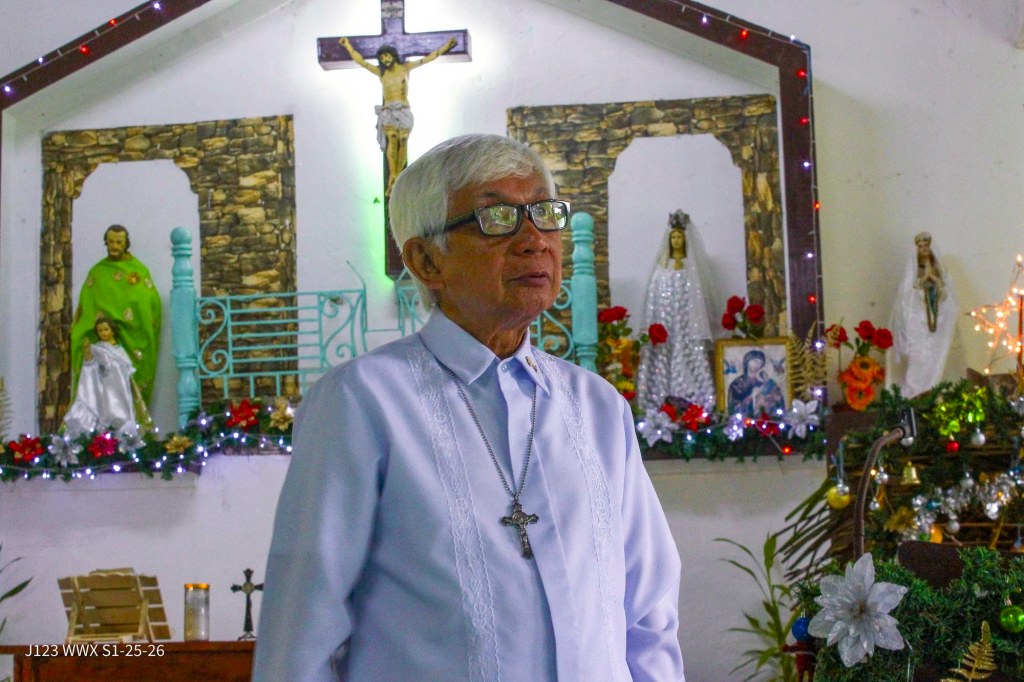
Faith also plays an important role in the community. Catholic residents of Daraitan practice their faith at the San Jose Ama Chapel, a nearly 200-year-old church where mass and worship services are held every Sunday. Though renovated and expanded to accommodate more parishioners, the chapel’s original stone walls remain, standing as a testament to its history and enduring faith.
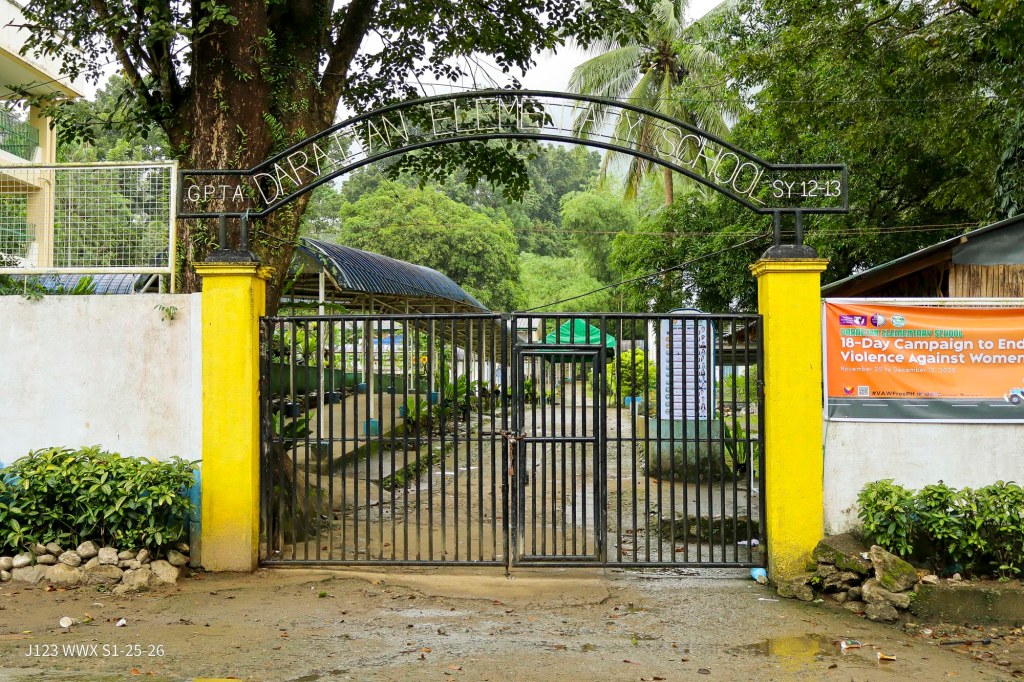
For nearly 200 years, the only Catholic church in Daraitan has stood at the heart of the community, older even than the church of Tanay itself. Its exposed stone walls are part of the original structure, preserved as the church expanded to serve a growing congregation. Photo by Janna Cambri.Bro. Edgar Ballenas, a lay minister at Daraitan’s San Jose Ama Chapel, has been administering Catholic mass and worship services to their attendees for more than a decade. He was a retired military officer who, after becoming a minister, now calls himself a “Soldier of Christ.” Photo by Janae Palingcod.Daraitan Elementary School is the only elementary school serving the community, providing access to education for children in a geographically isolated area. While the barangay also has one high school, access to collegiate-level education requires students to travel to the town proper. Photo by Gabbie Senatin.
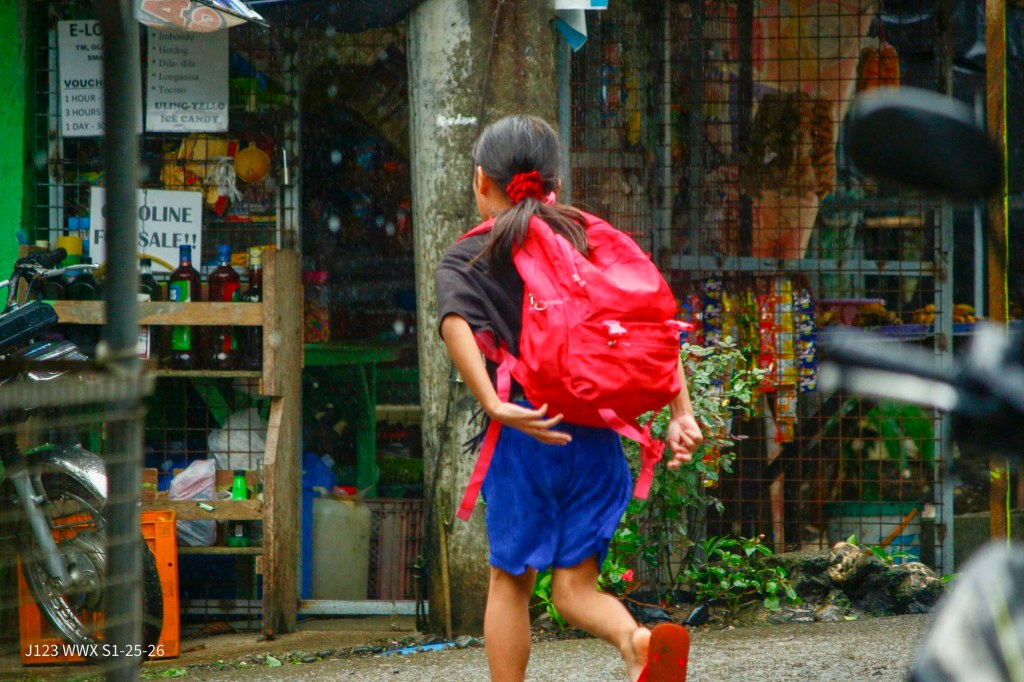
The elementary school in Daraitan, Tanay, Rizal stands closed on weekends – its gates locked and classrooms silent. The stillness of the compound contrasts sharply with the life unfolding outside its walls. Despite the heavy rain, children run along muddy streets: some with backpacks still slung over their shoulders, others sent on errands, and a few simply making their way home.
A young girl runs through the rain with her bright pink backpack standing out as she heads home, which is just across the Daraitan Elementary School. An estimated 10,000 children are enrolled in the elementary and high schools in Daraitan. Photo by Allyana Barquira
Daraitan is a tight-knit community where children move freely and feel secure walking alone around the barangay. Strangers are rarely met with fear, as tourism also flourishes in the area. In a quiet gesture of care, one child even offered a plastic bag to shield the camera from the rain.
Surrounded by natural beauty yet shaped by looming uncertainty, more than 10,000 students continue their daily lives in Daraitan’s primary and secondary levels. For now, the children remain unaware of the scale of what lies ahead.
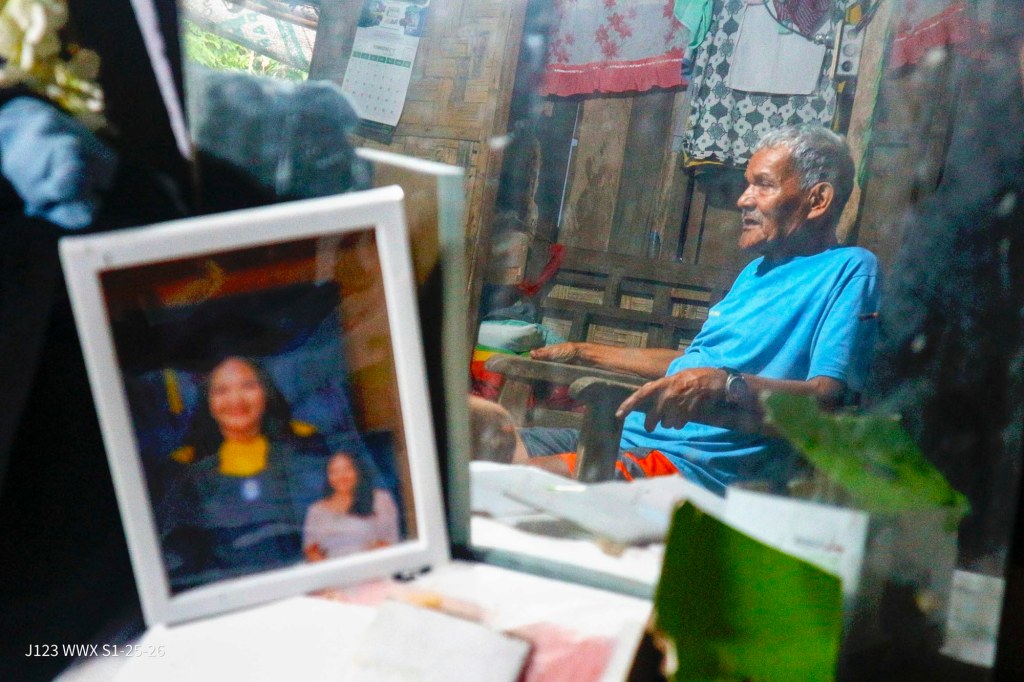
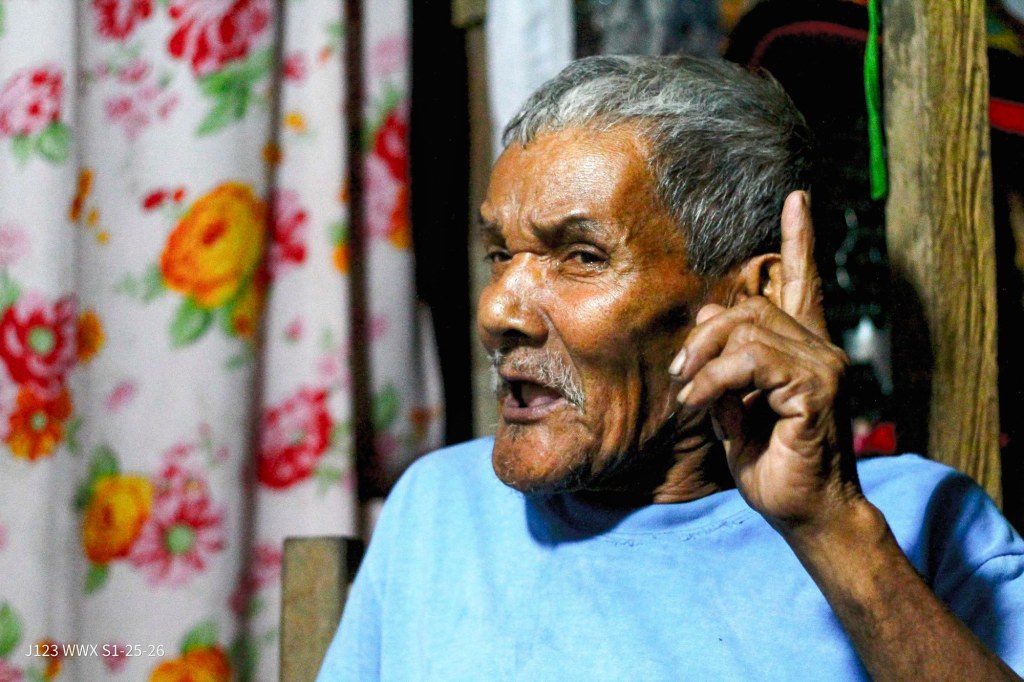
Rogelio Catameyo sits in the living room of his home, built just three years ago in the aftermath of Typhoon Ulysses. The 74-year-old farmer and former activist currently lives with his wife, one of his three children, and a granddaughter. Photo by Karl Agbugay.Catameyo emotionally recalls the challenges he faced in opposing the approval of the Kaliwa Dam, including harassment from authorities, police surveillance, and visits by uniformed personnel to his home. He was part of a nine-day protest march from Nakar, Quezon to Mendiola, enduring a grueling journey on foot to press their opposition. Photo by Duane Añosa
Catameyo, along with many other Dumagat-Remontado leaders and activists, strongly opposes the Kaliwa Dam, warning that the project would severely disrupt their lives and other nearby communities. He said that if residents are forced to leave their homes to make way for the dam, the government must provide proper relocation, including a decent house and land for farming.
“Kung matutuloy ang dam, mawawala rin kami. mamamatay ang mga tao,” Catameyo lamented.
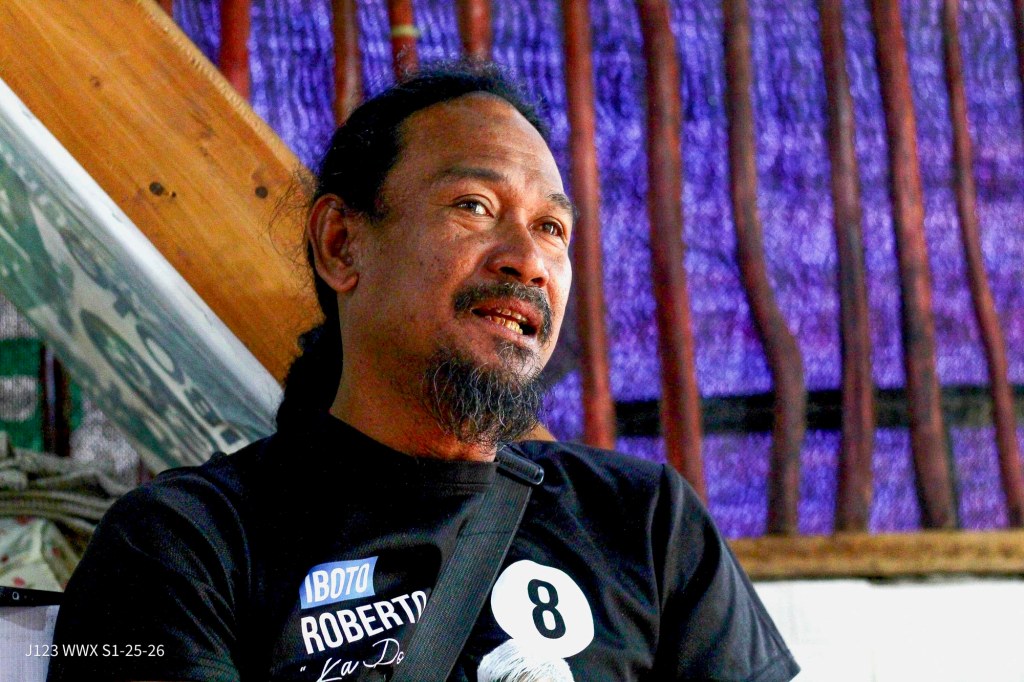
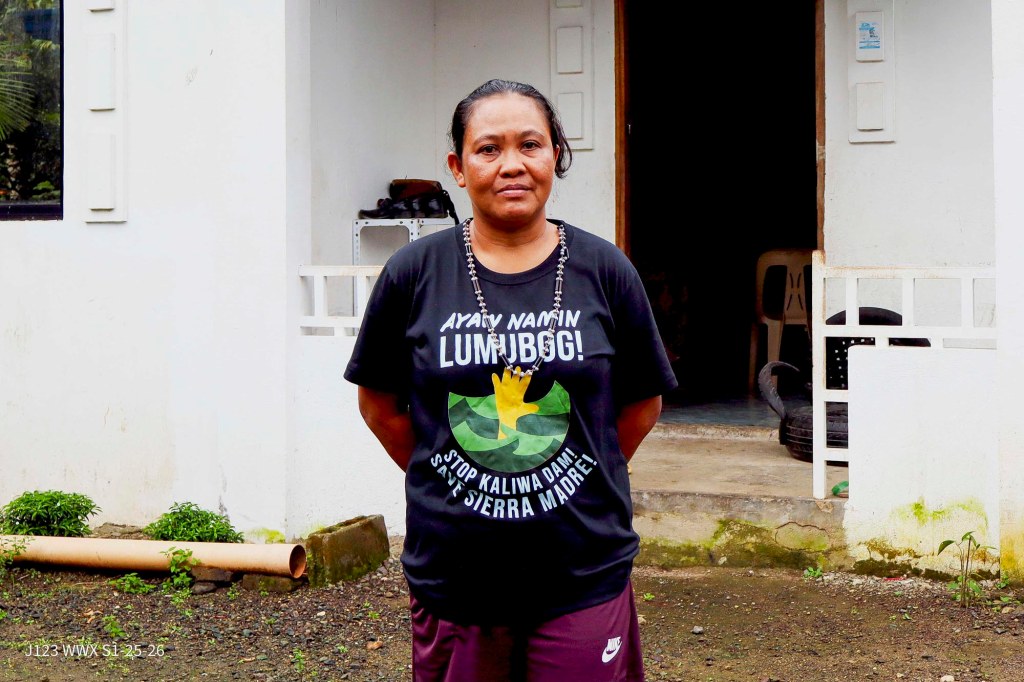
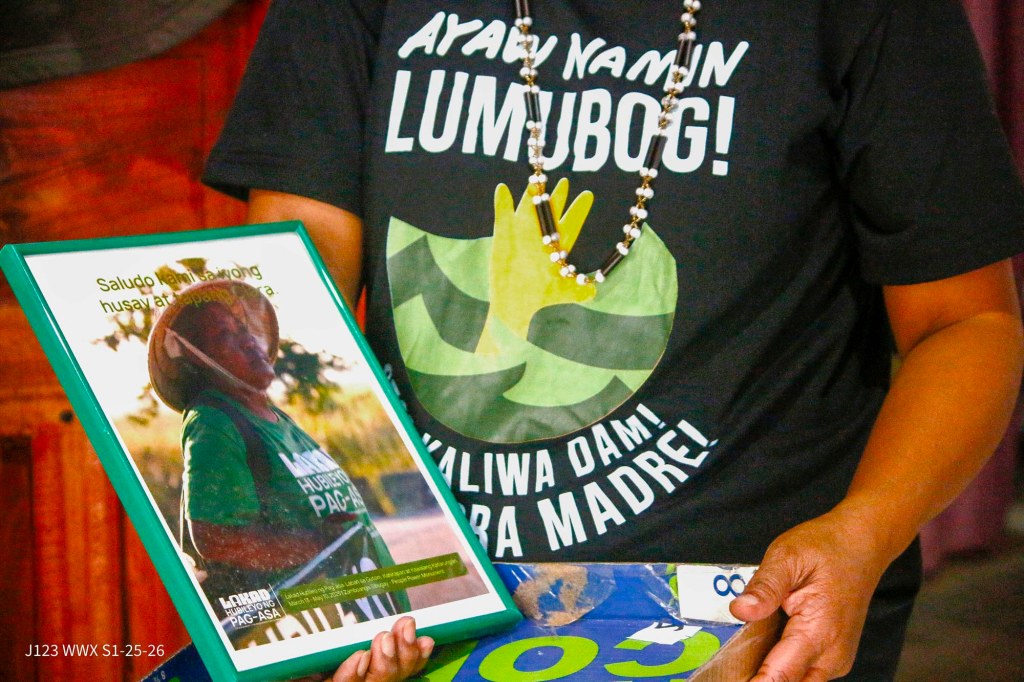
Dumagat-Remontado leader Renato Ibañez recounts the community’s efforts to oppose the Kaliwa Dam, saying he has faced harassment and illegal detention by authorities over allegations of colluding with the NPA. Ibañez, a member of one of the tribe’s three major clans, says he will continue resisting the project for his community. Photo by Duane Añosa.Ma. Clara Dullas, president of Kababaihang Dumagat ng Sierra Madre (KGAT), stands in front of her home wearing a shirt that reads ‘AYAW NAMIN LUMUBOG, STOP KALIWA DAM, SAVE SIERRA MADRE’ – a clear call to protect their land, homes, and future. Photo by Gabbie Senatin.Dullas holds a portrait of herself taken during the Lakad Hubileyo ng Pag-asa, a solidarity walk in which various groups traveled more than 4,000 kilometers on foot from Zamboanga Sibugay to Ateneo de Manila University in Quezon City. She carries the call of the Kababaihang Dumagat ng Sierra Madre (KGAT): STOP KALIWA DAM! SAVE SIERRA MADRE! Photo by Allyana Barquira.
Ma. Clara Dullas, the president of the Kababaihang Dumagat ng Sierra Madre (KGAT), grounds her leadership in her identity as a katutubong Dela Cruz, one of the three original clans in Daraitan.
She explains that their lineage traces back to the earliest settlers, noting, “Kami yung katutubo, Dela Cruz… sa aming katutubo, ang dugo ang basihan ng katandaan, hindi ang edad.”
As a founding leader of KGAT, she shared that the organization was founded in 2019 after realizing that advocacy alone was not enough: “Eh, naisip namin eh puro advocacy… kailangan talaga magkaroon ng livelihood para mas sustained ang advocacy.”
Often representing the Dumagat-Remontado community on a bigger scale, Ma. Clara emphasized the responsibility of speaking out not just for herself, but for others who cannot, saying, “Hindi lahat ng tao ay may kakayahan na magsalita… kaya kami yung nagsasalita.”
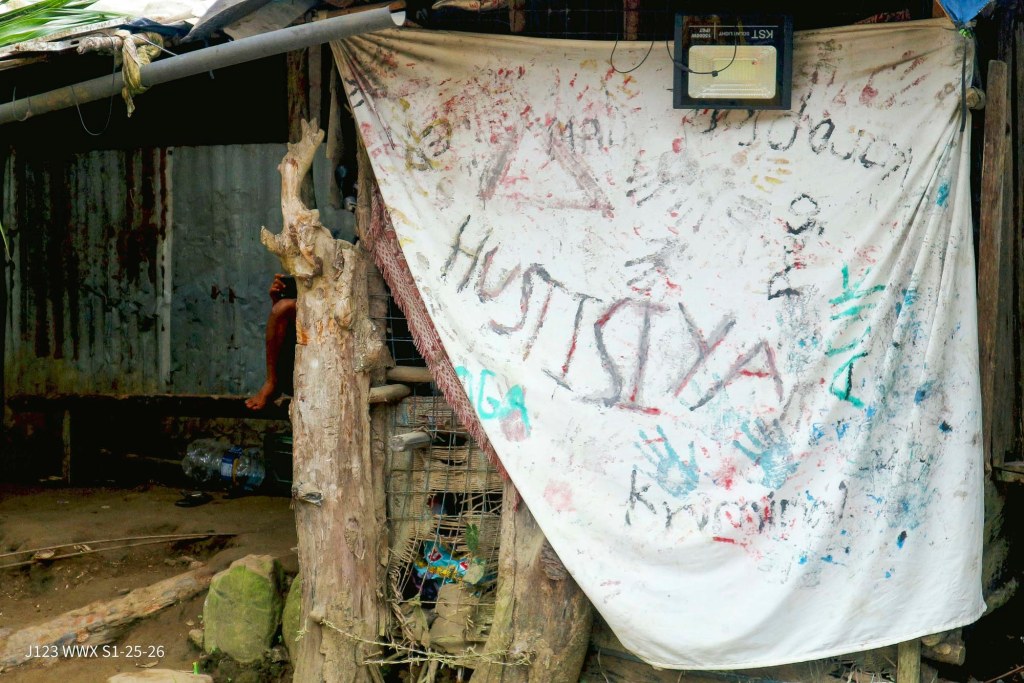
A paint-stained white cloth bearing the word ‘HUSTISIYA’ hangs outside a house in Daraitan. The Dumagat-Remontado community fears that the construction of the Kaliwa Dam will destroy their livelihoods and, ultimately, their lives. To them, justice lies in stopping the project. Photo by Karl Agbugay.Amid the forested mountain range of Sierra Madre lie the resolute hearts of the Dumagat-Remontado community, where human beings and nature stand firm, determined to keep fighting a common threat that aims to destroy years’ worth of ancestry, resources, culture, and identity. Photo by Janae Palingcod.
For Dumagat-Remontado indigenous leader Ka Nato, the resistance against the Kaliwa Dam is not a rejection of progress, but a call for development that does not erase, displace, or inundate the ancestral lands and communities in its path. Their struggle asserts that progress should not come at the cost of identity, memory, and survival – values deeply rooted in the Sierra Madre long before modern infrastructure projects were conceived.
This resistance is echoed in the voice of Ma. Clara, whose advocacy is grounded in lineage and lived experience. She warns that the project threatens not only communities but the natural world itself: “Kalikasan yung sinisira – mismo ang kalikasan na magpapakita na hindi na dapat ginagawa ito.”
She reminds us that nature is not separate from human life, emphasizing, “Lahat tayo ay umaasa sa may likha. Hindi tayo nabubuhay para lang sa atin; nabubuhay tayo para sa lahat.” In her words, the struggle against the Kaliwa Dam becomes a collective responsibility – one that calls for stewardship, accountability, and respect for both people and the environment.
Their fight against the Kaliwa Dam and other environmentally destructive projects is about the fathers and mothers of their community wanting their children to grow up knowing about the mountains of Sierra Madre, about their healers who refuse to abandon the techniques of their ancestors, and their bloodline that has long fought for their community to stand its ground in the heart of Sierra Madre.
[Editors’ Note: This photographic essay was produced by photojournalism students of the Department of Journalism, UP Diliman College of Media and Communication in November 2025.]

 Mata: Asia Press Photo
Leave a comment