
By Joel Mataro
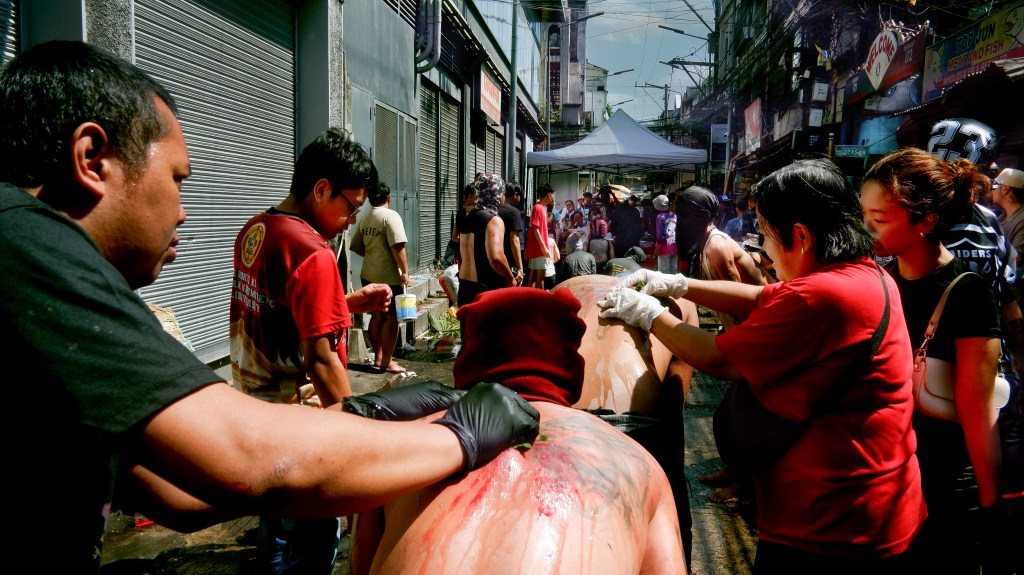
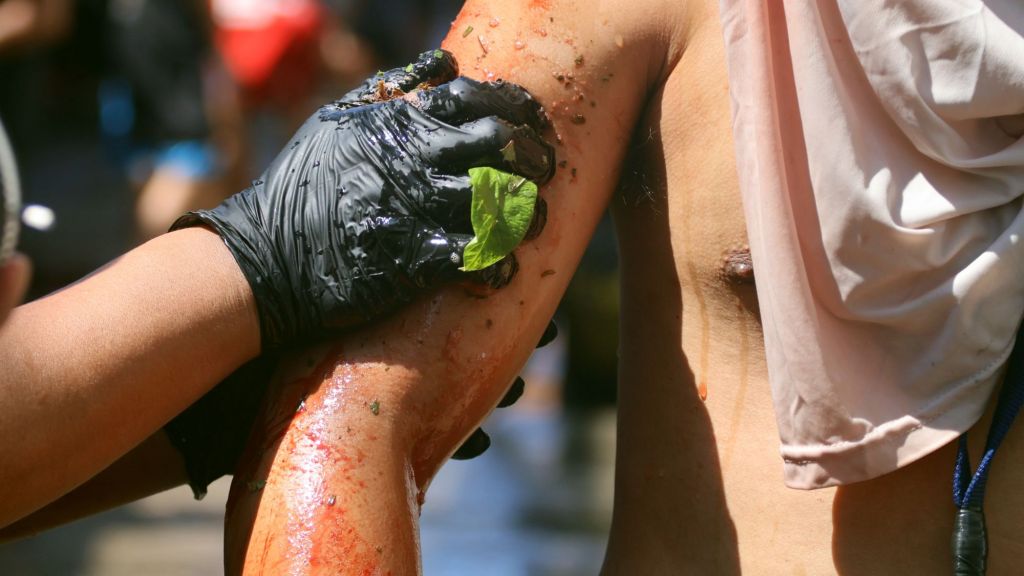
Rhiya Raymundo Catacutan, a lenten Emergency Medical Volunteer of the parish of San Juan Nepomuceno presses tightly a fistful of boiled guava leaves to clean the wound and stop the bleeding of a penitent’s self-inflicted wound. She is performing her lenten vow or “panata” which she said, she inherited from her forebears of Malibay, Pasay.
On Good Friday, they are Medical Volunteers and Flagellants at the same time.
Magkaiba man ang dahilan ng panata, iisa naman ang panata ng pananampalataya.
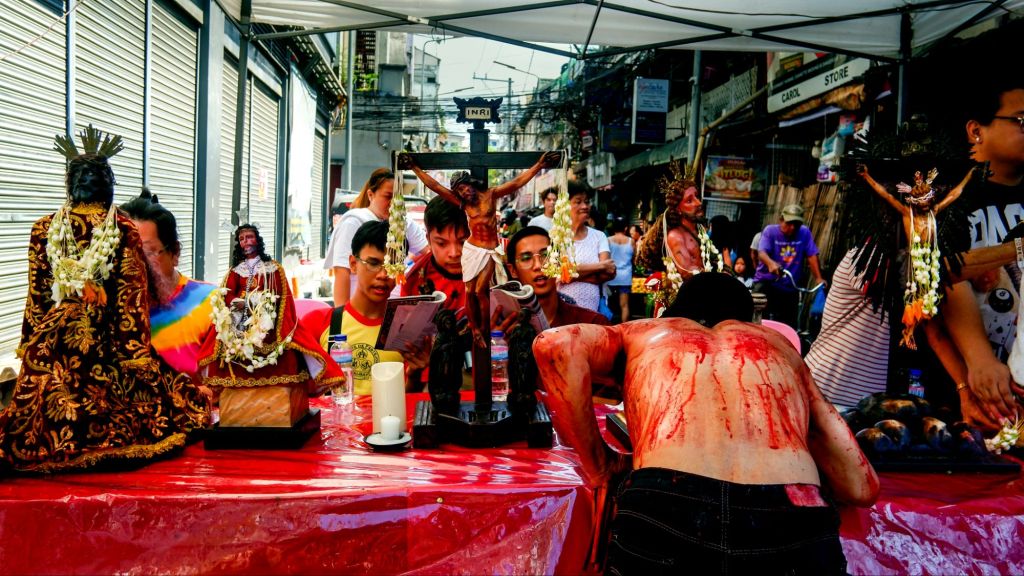
With the distinctive melodic prayer chant of “Pabasa” as background, Flagellants in Malibay follow a ritualistic process on Good Friday, mirroring broader Philippine Holy Week traditions, starting with spiritual preparation and ending around 3 PM. The Church discourages these extreme acts, but participants view them as personal vows (panata) to emulate Christ’s suffering.
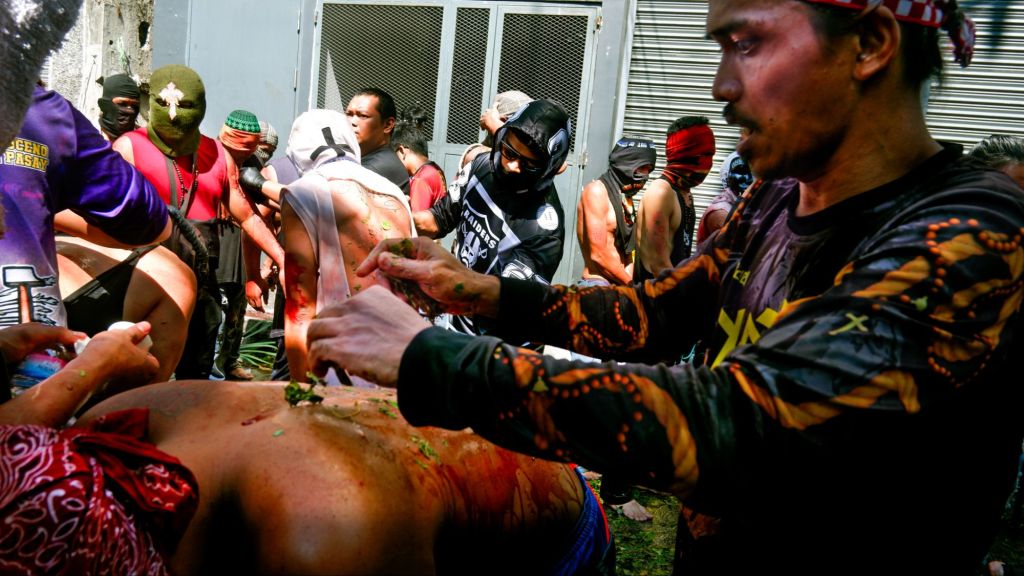
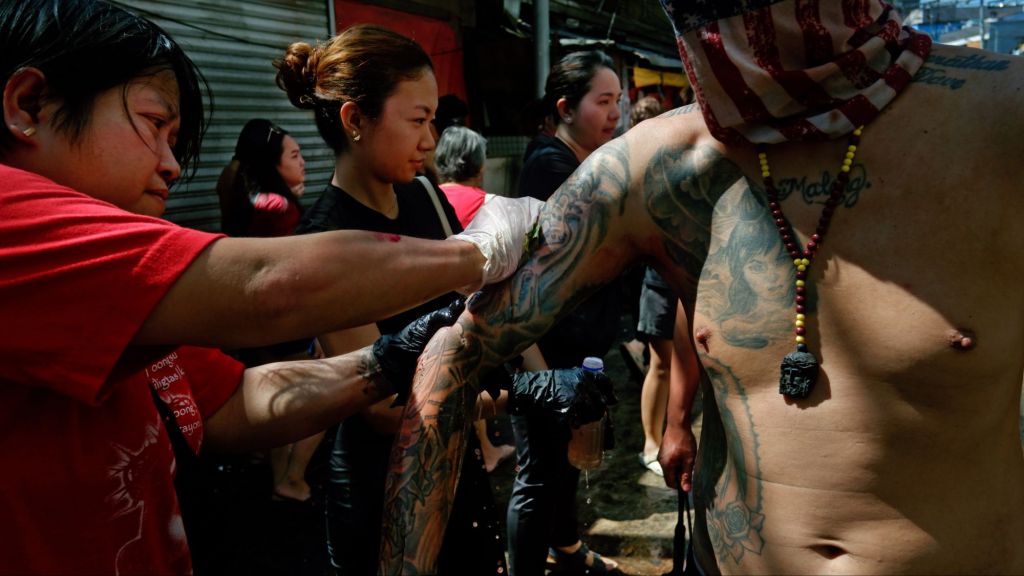
As Rhythm continues with hymns; blood drips as lashes intensify, the ever-ready team of Medical Volunteers, up their game to match the energy and dedication brought about by
the flagellants.
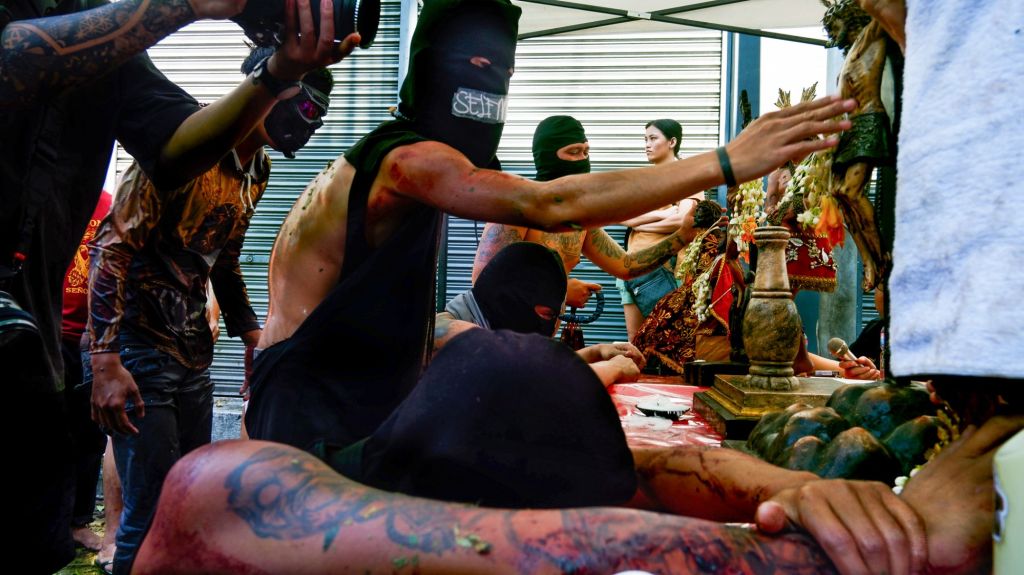
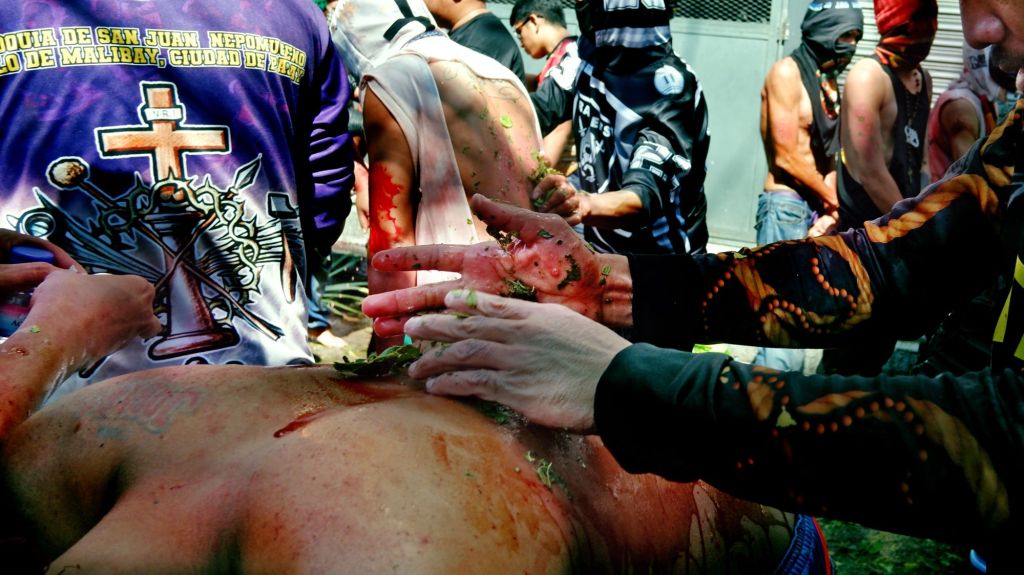
Penitents prepare spiritually by reciting prayers at a cemetery or home, often fasting beforehand. They don hooded black robes, remove shirts, and sometimes anoint skin with alcohol. The first person they go to is the “magkakadlit” (cutter) who uses a shared blade, knife, razor, or glass-embedded plank to make incisions on the back, chest, arms, and legs to draw blood.
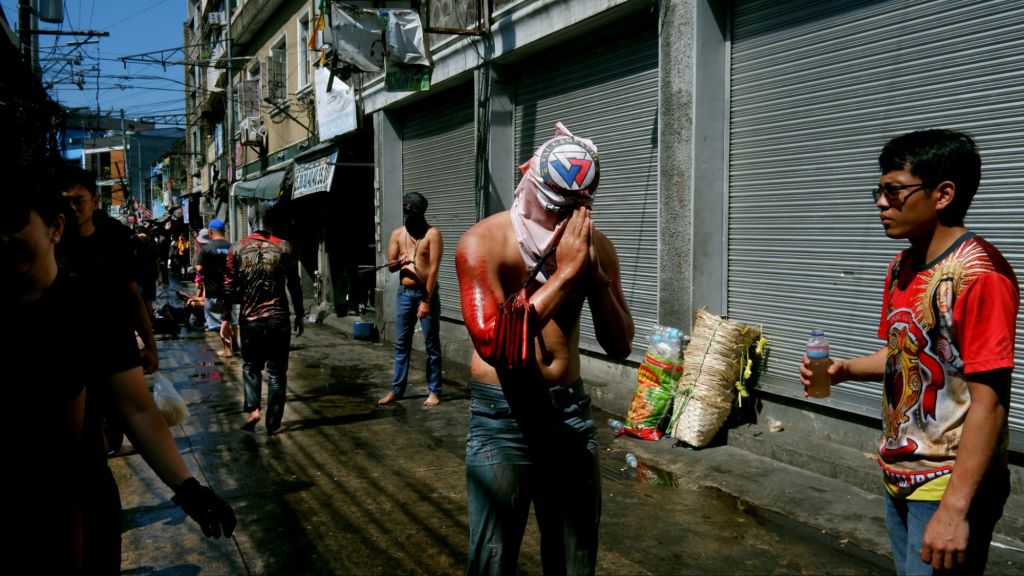
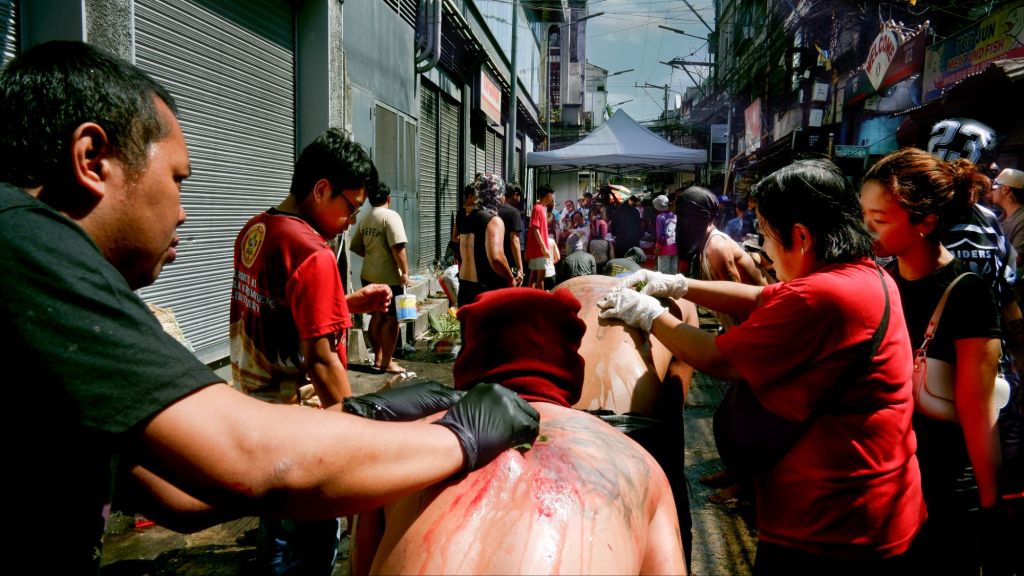
Medical Volunteers prepares by boiling large quantities of guava leaves, “pitong tiklis” put them in a large vat, say a prayer then carry them near the “Pabasa’s” Altar of Repose and Contrition. They arrive at the Emergency Tent at 6:00am and stays until 12:30 noon, which she added is not usually the case.
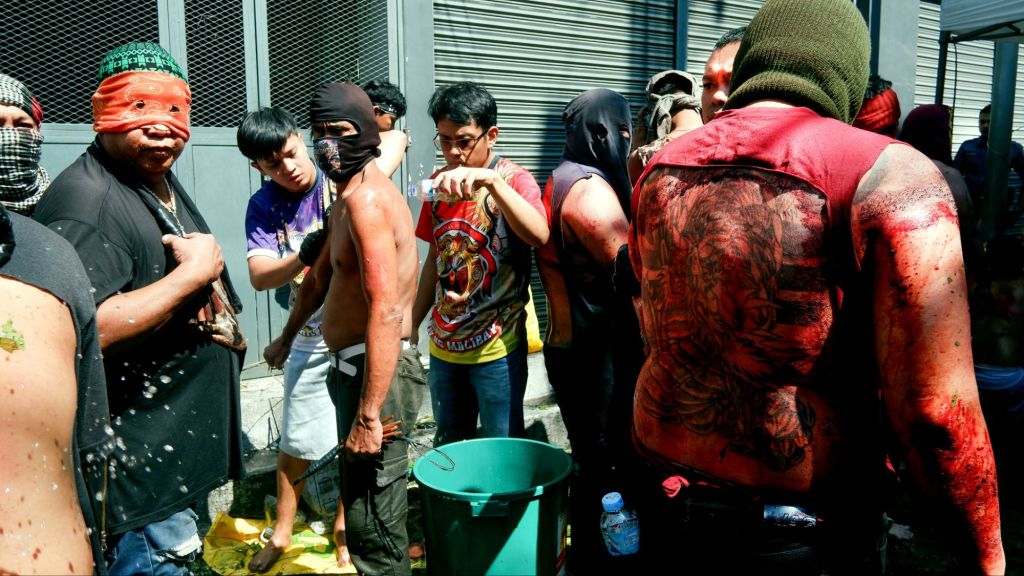
As Flaggelation March moves on, Penitents carry heavy wooden crosses and join processions, whipping backs with burillos (bamboo sticks tipped with thorns/glass) or multi-thonged whips. That Good Friday, they were tied in heavy duty chains.
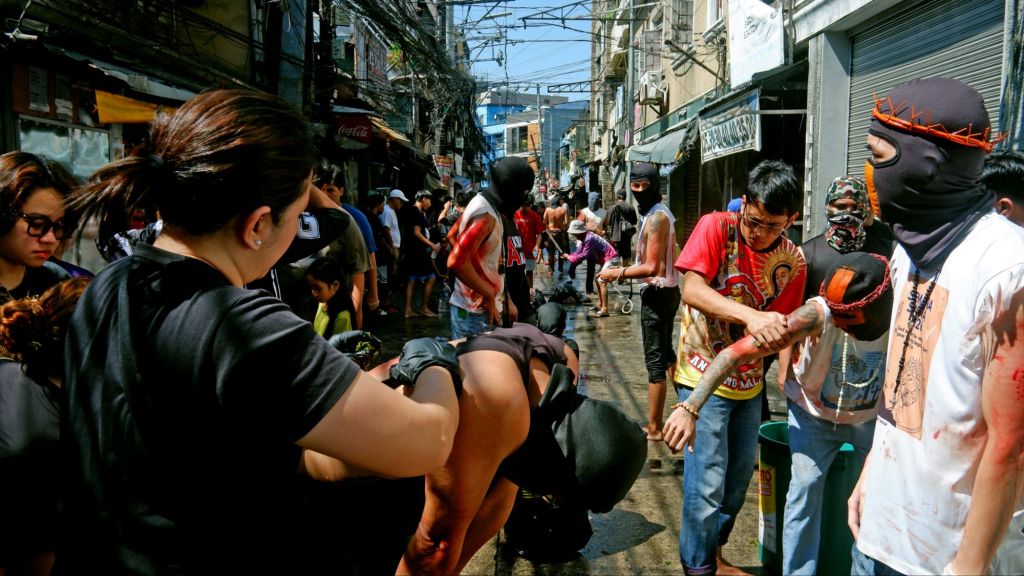
They walk barefoot under the sun, stopping at Stations of the Cross to pray, dance briefly, or receive paddle strikes from assistants. With every stop, Medical Volunteers are there, patching, dressing, squeezing a handful of “Bayabas na Panglanggas.
In an interview with Rhiya Raymundo Catacutan, she revealed that she is already doing this service for the last years. She particularly said she inherited this from her forebears, and it is common for the “Taong Malibay” people from Malibay to carry on the tradition. She said too, that even though there are already around 8-10 medical volunteers during that Flagellation March, still they need more volunteers since there are “dayo” visiting penitents that are not from Malibay.
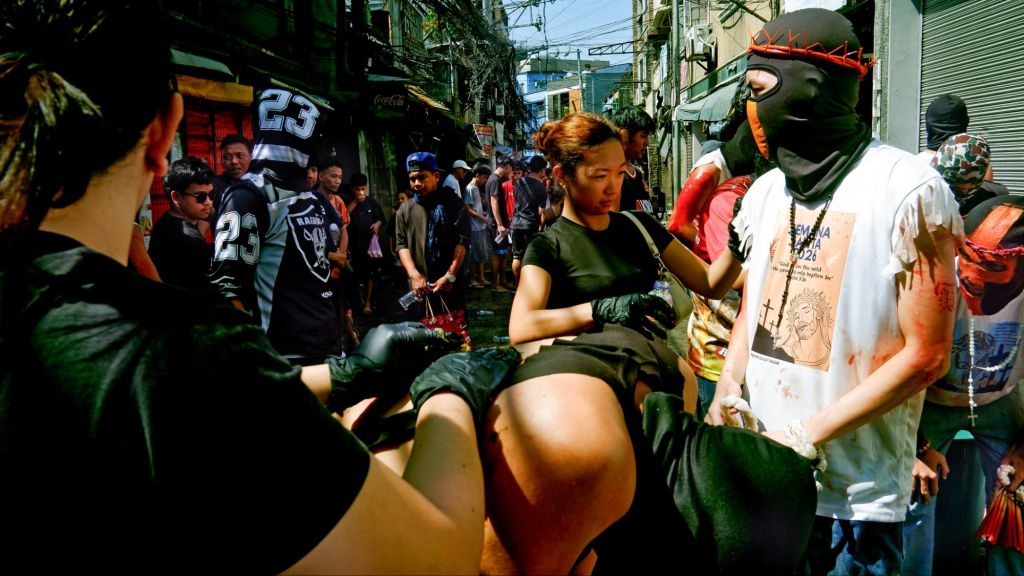
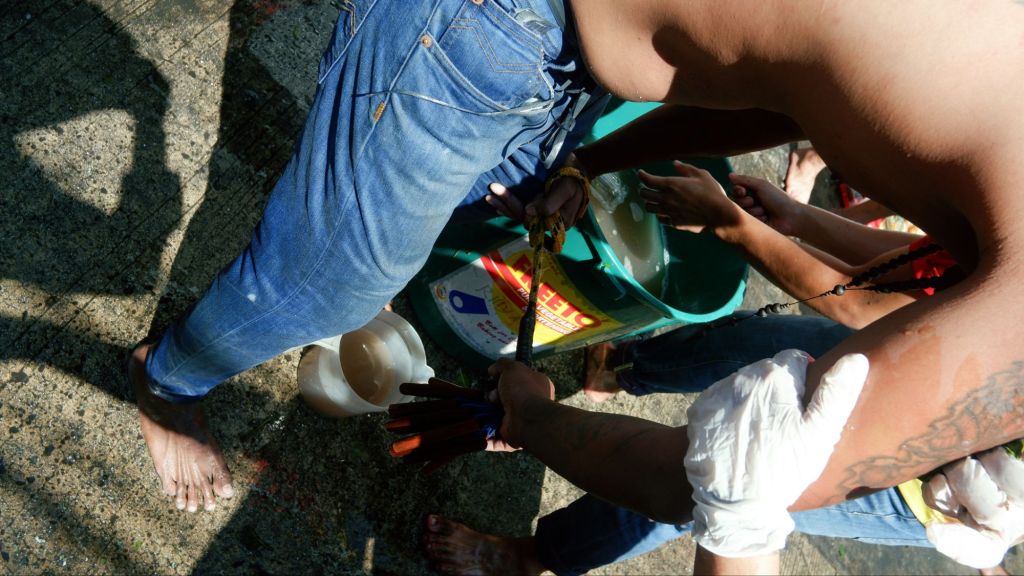
Furthermore, she said that Medical Volunteers are not only tied with the cleaning and dressing of the wounds, but they also cater to diziness, high-blood pressure and other situations that needs emergency Medical Assistance. She said in the Emergency Tent there are two nurses and a Medicine student manning the tent. Asked wether the Emergency Medical Team have a name she said they had none, but they have a President who is now among the Flagellants.
Malibay is famous for hosting the oldest running Cenaculo (passion play) in the Philippines, which began in 1902. This dramatic reenactment of Christ’s life spans several days and has been an integral cultural activity for over a century.
 Mata: Asia Press Photo
Leave a comment