
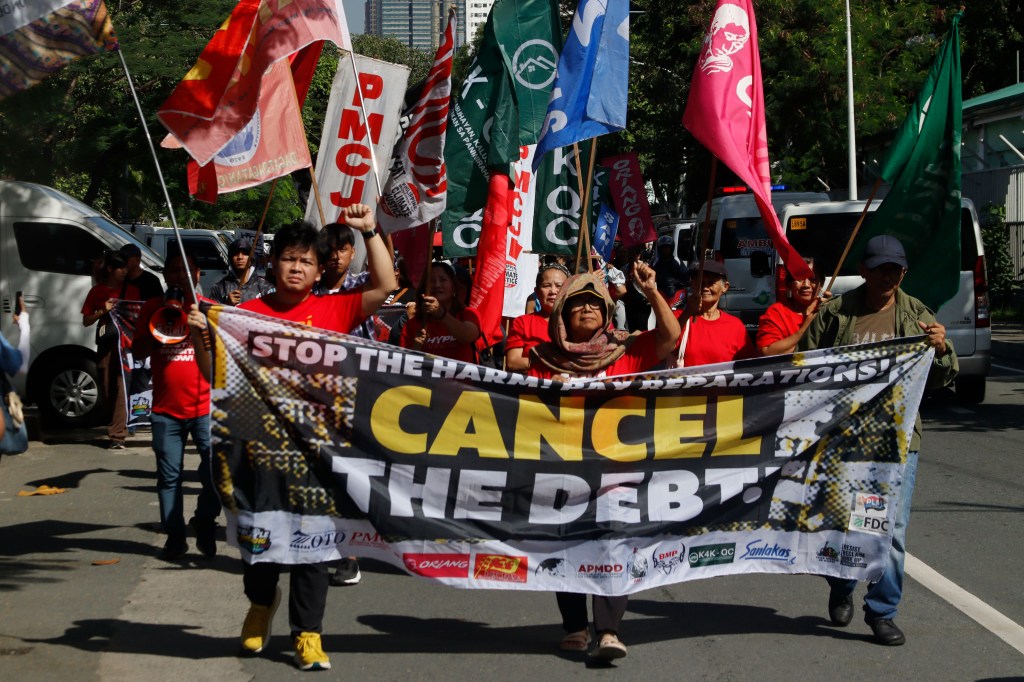
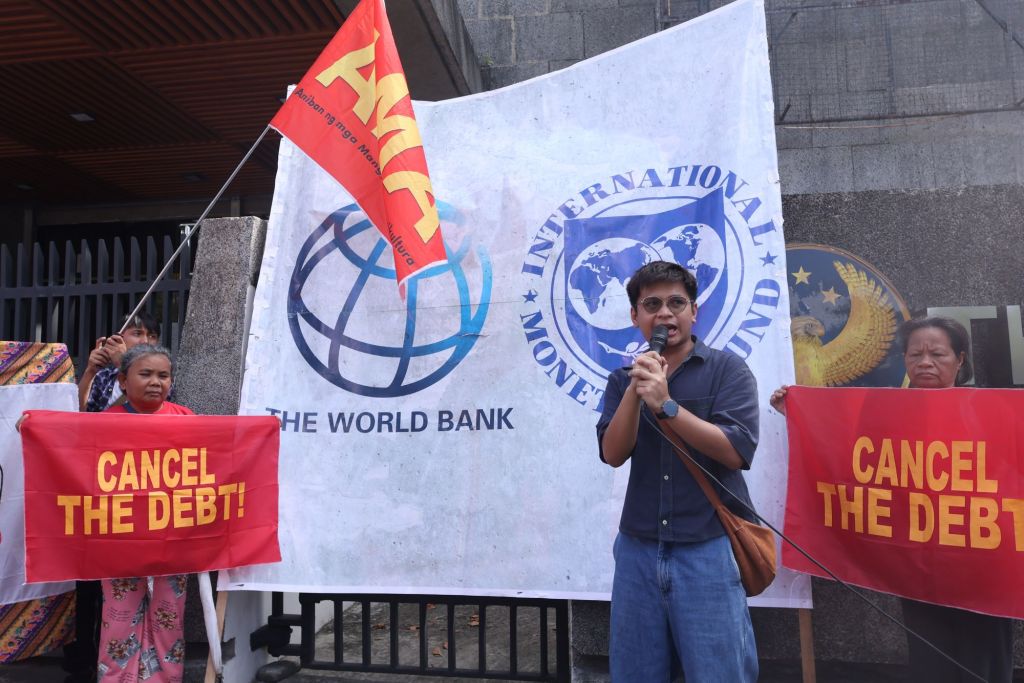
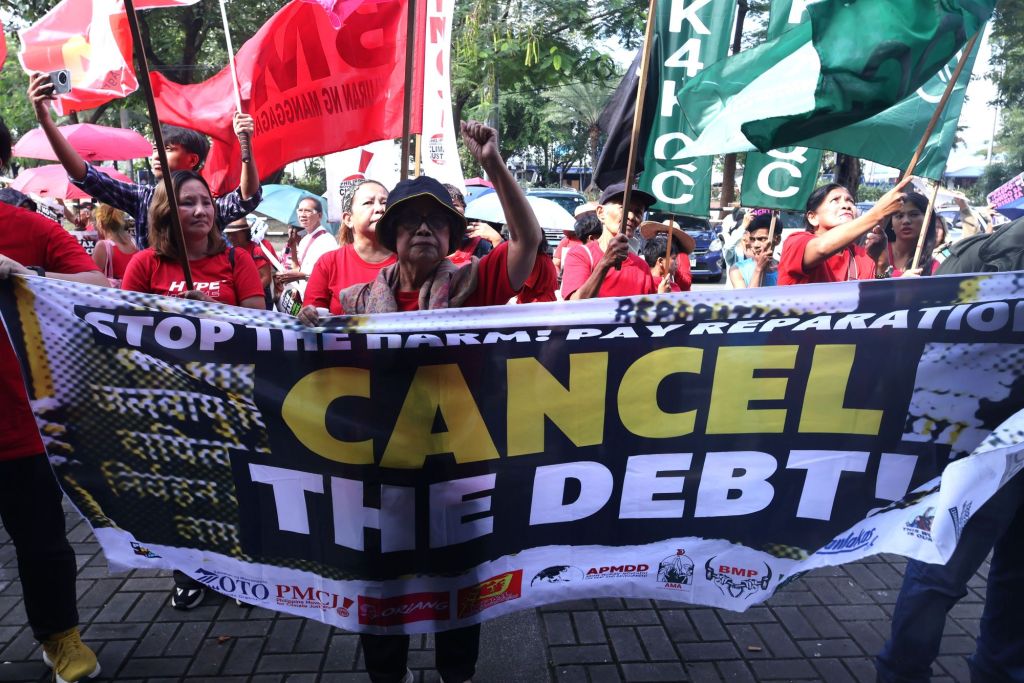
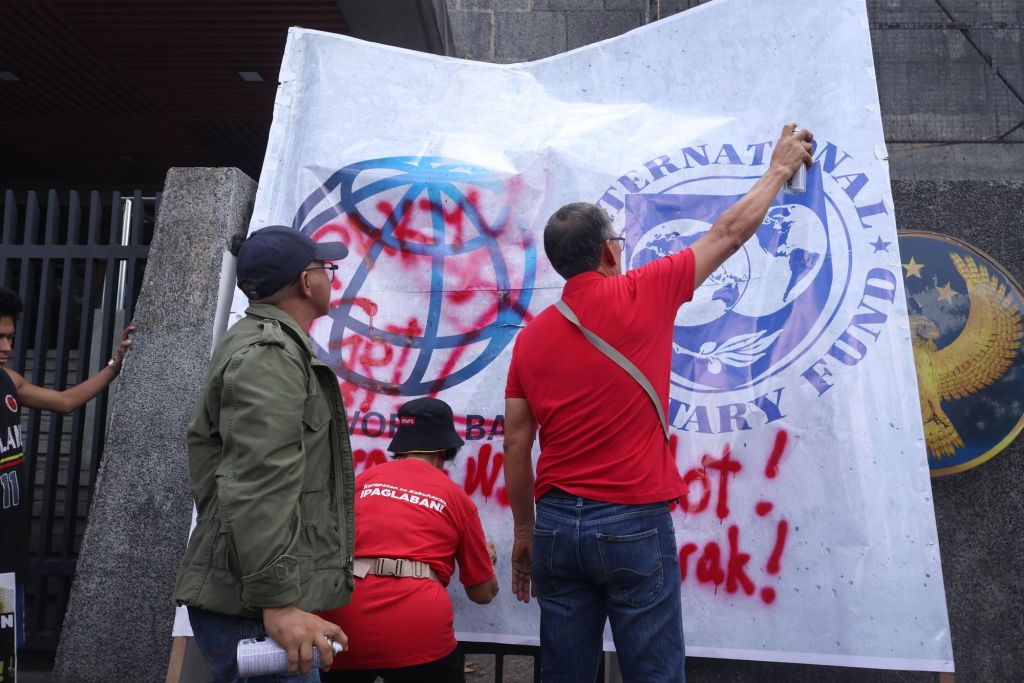
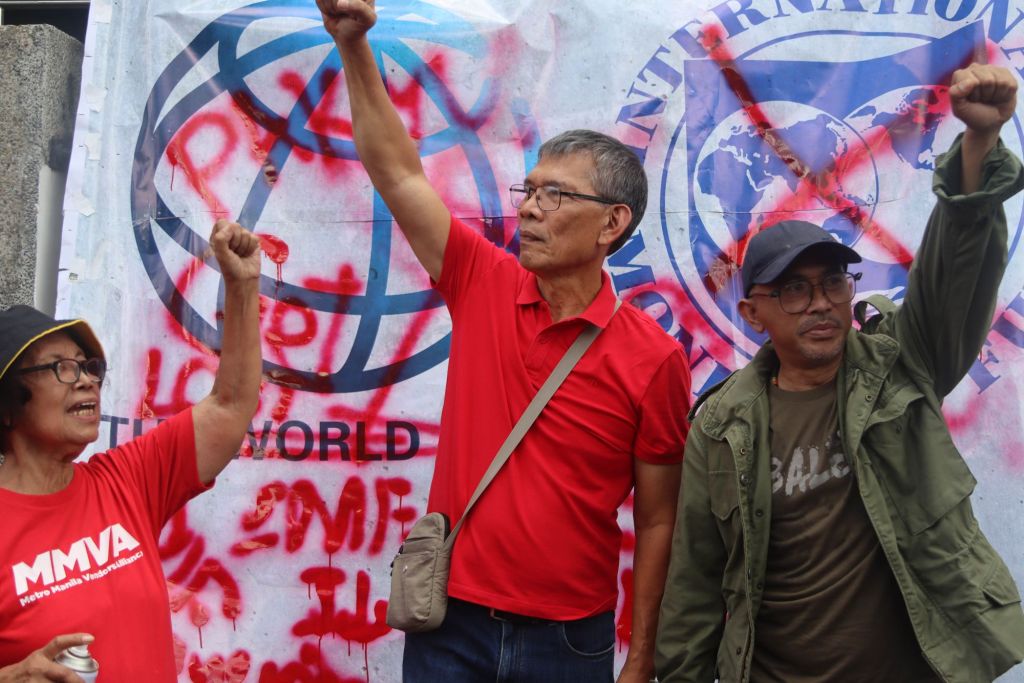
MANILA – Activists marched to the International Monetary Fund office at the Bangko Sentral complex to denounce the IMF-World Bank policies that have trapped developing nations, including the Philippines, in cycles of debt, poverty, and climate-induced disasters.
The protest in Manila was led by the Asian Peoples’ Movement on Debt and Development (APMDD) as part of a Global Day of Action against the IMF-World Bank’s human rights violations, illegitimate debts, and enforced austerity in developing countries.
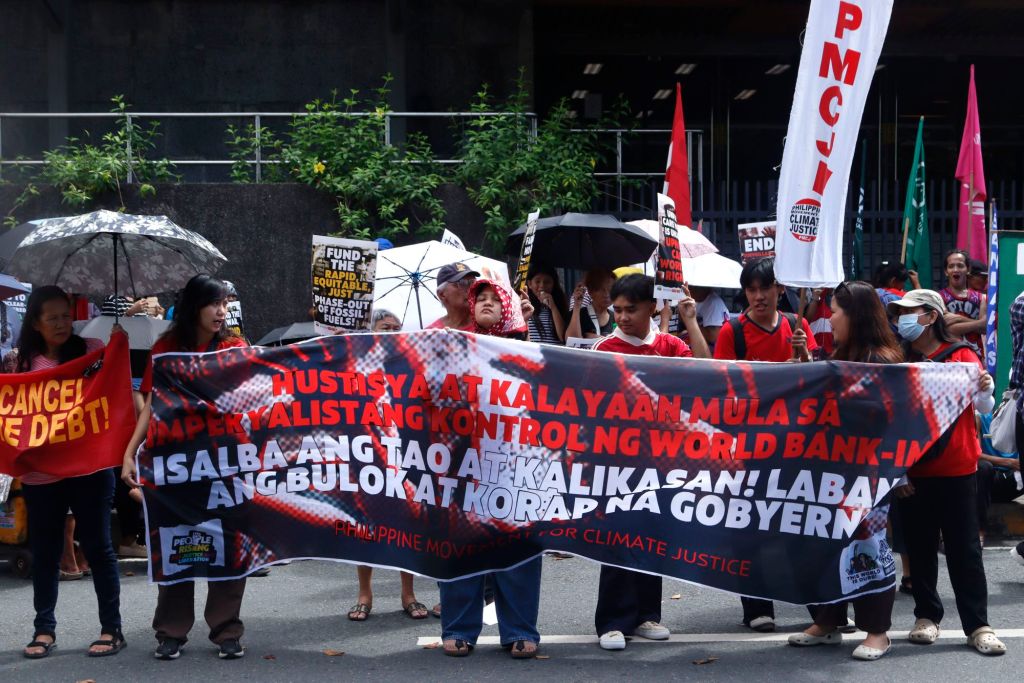
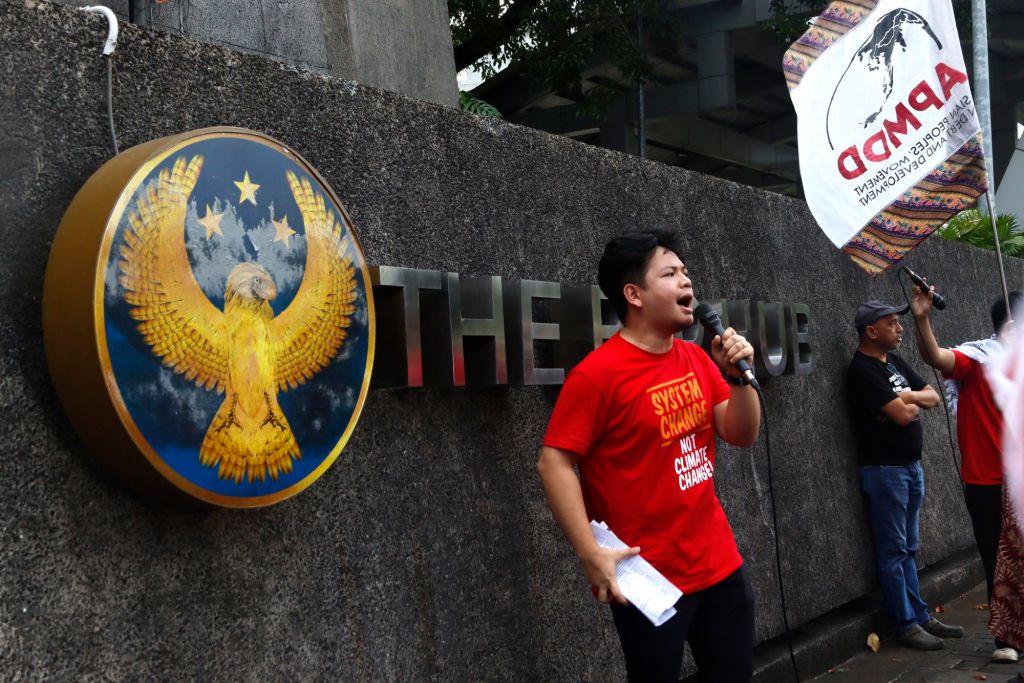
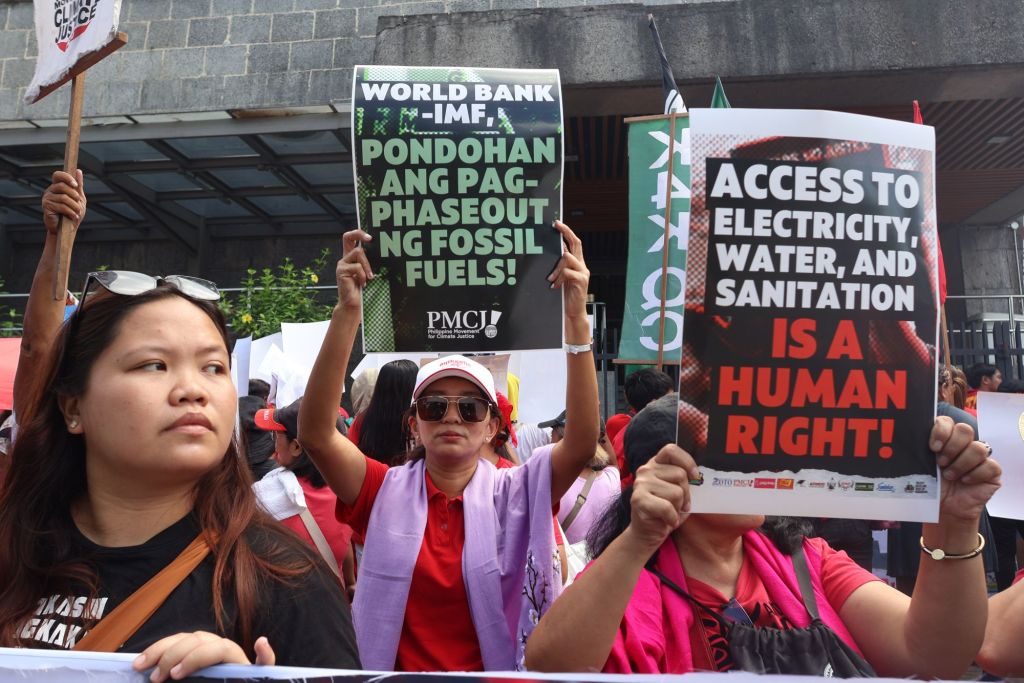
The worldwide protests were held in Asia, Africa, Europe, and Latin America, while central bankers, finance ministers, and delegates gathered in Bangkok, Thailand for the IMF-World Bank’s annual meetings.
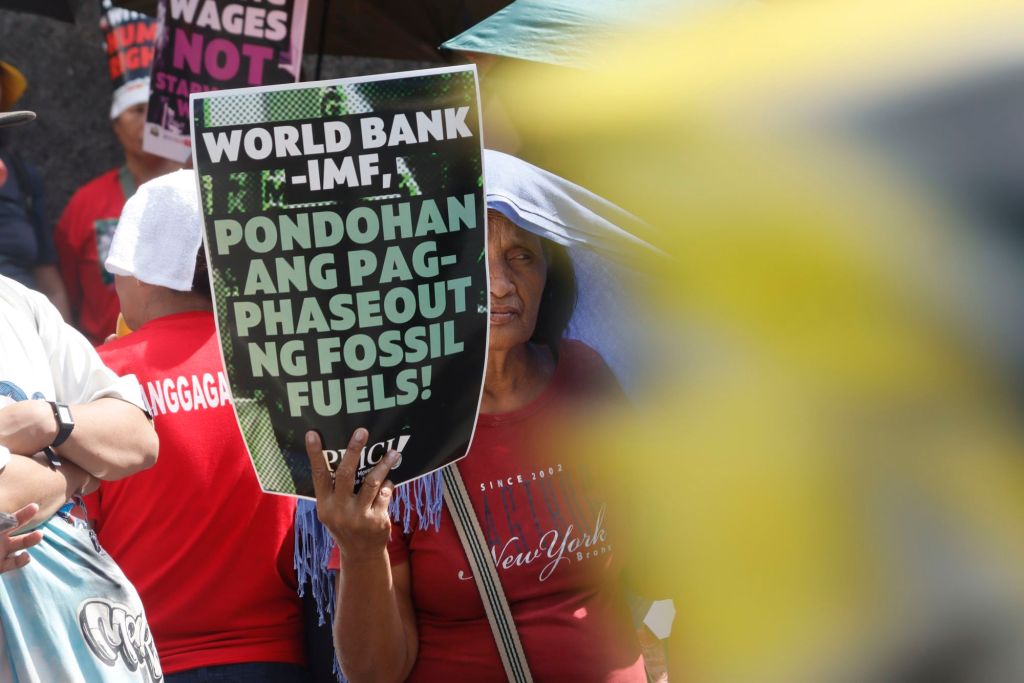
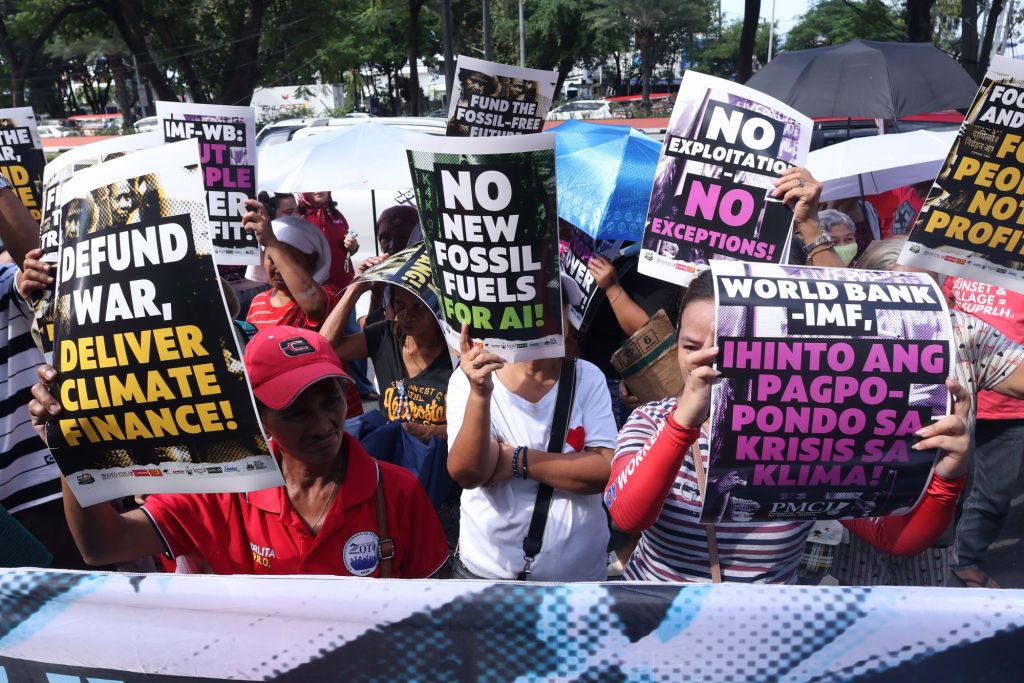
The IMF-World Bank, known as the Bretton Woods institutions, are responsible for over 80 years of structural economic inequality, ecological destruction, and human rights violations in developing countries.
The global protests condemned the institutions for perpetuating predatory debt traps, enforcing extractivism, imposing inequitable trade, and entrenching neo-colonial dependence.
While debt-distressed countries are pressured to slash public spending on healthcare, education, social protection, and climate resilience, vast public resources—along with substantial capital from private financial institutions—continue to fund arms production and nuclear modernization.
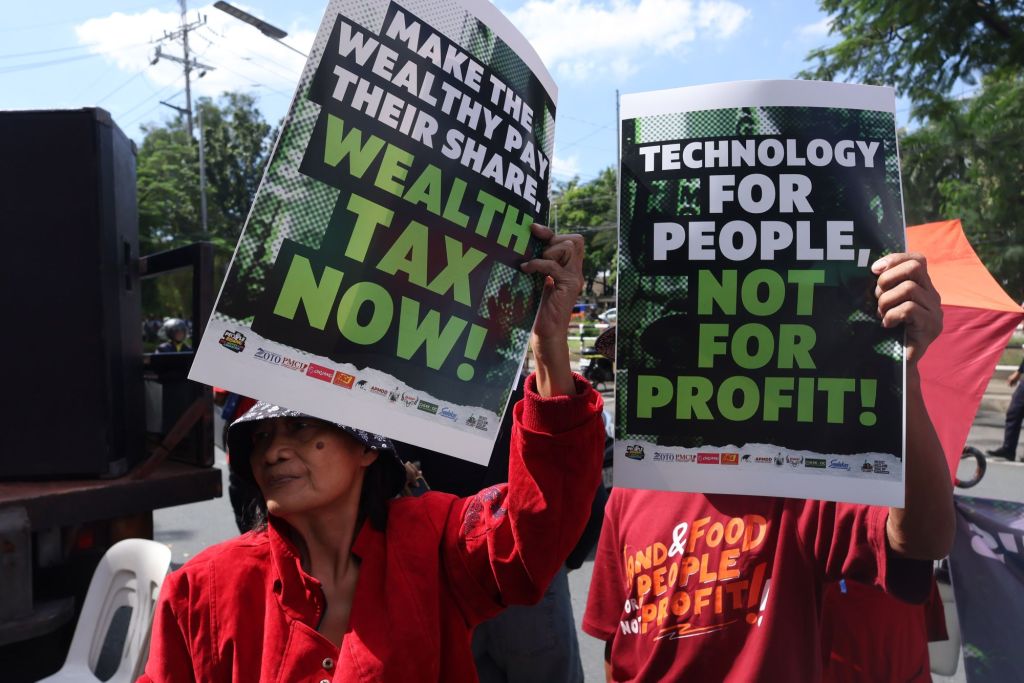
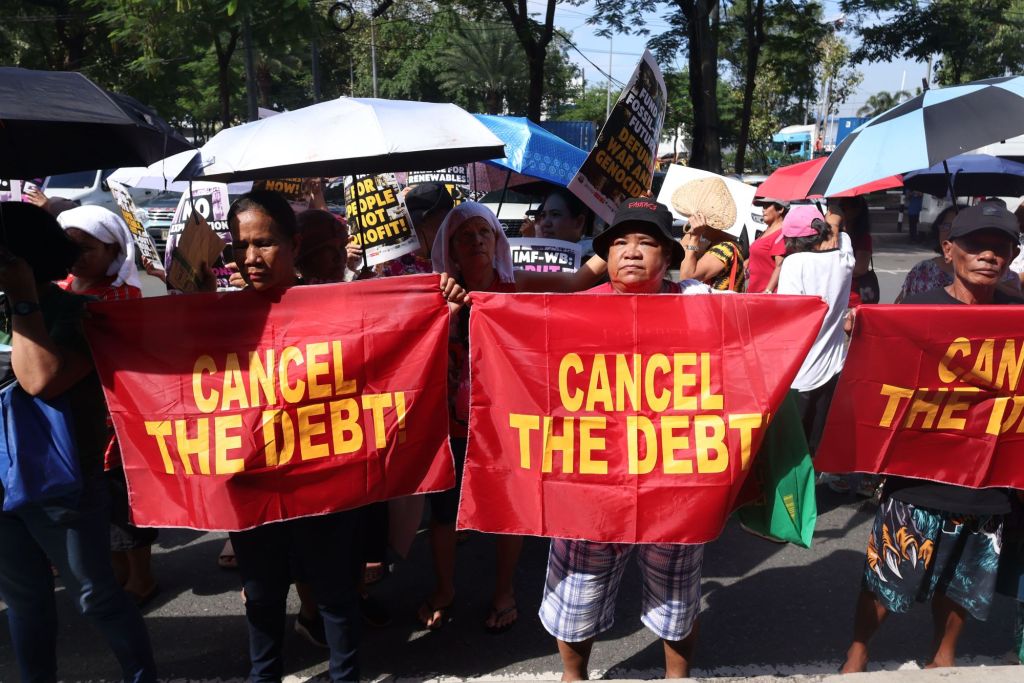
Lidy Nacpil, coordinator of Asian Peoples’ Movement on Debt and Development: “For over 80 years, the IMF and World Bank have pushed policies and agendas that concentrate wealth and power in the hands of Global North countries and their elites and corporations, while violating the economic sovereignty of developing countries like the Philippines. Together, the IMF and World Bank control an international financial architecture that drives global inequality and climate catastrophe. By promoting regressive taxation, enforcing austerity, financing fossil fuel projects and pushing debt-creating finance as the solution to the climate crisis, these institutions perpetuate economic violence and climate injustice against our people and communities.
We demand a structural overhaul of the global economic and financial system, including the cancellation of unsustainable and illegitimate debts that harm people, communities, and the planet, an immediate end to IMF surcharge fees and austerity conditionalities, and the delivery of reparations for the historical and continuing injustice perpetuated by these institutions.”
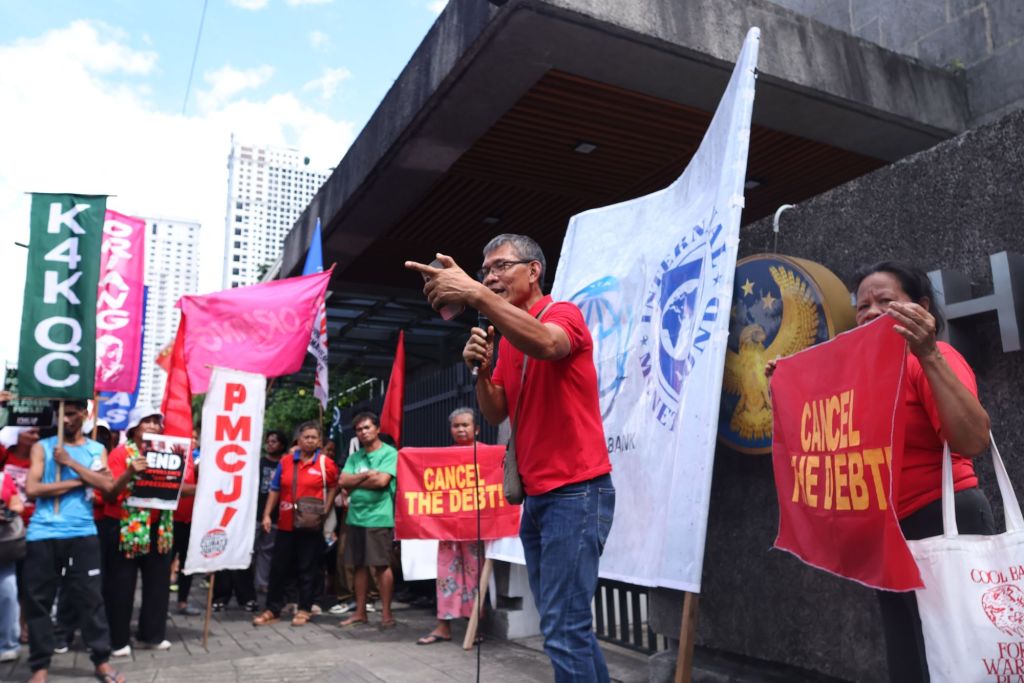
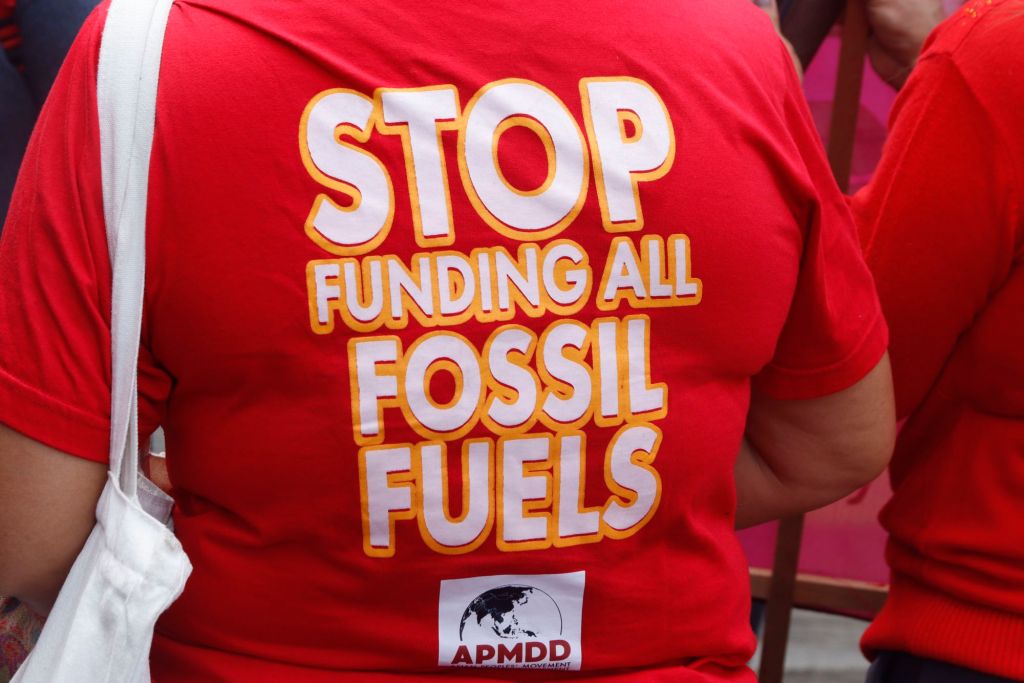
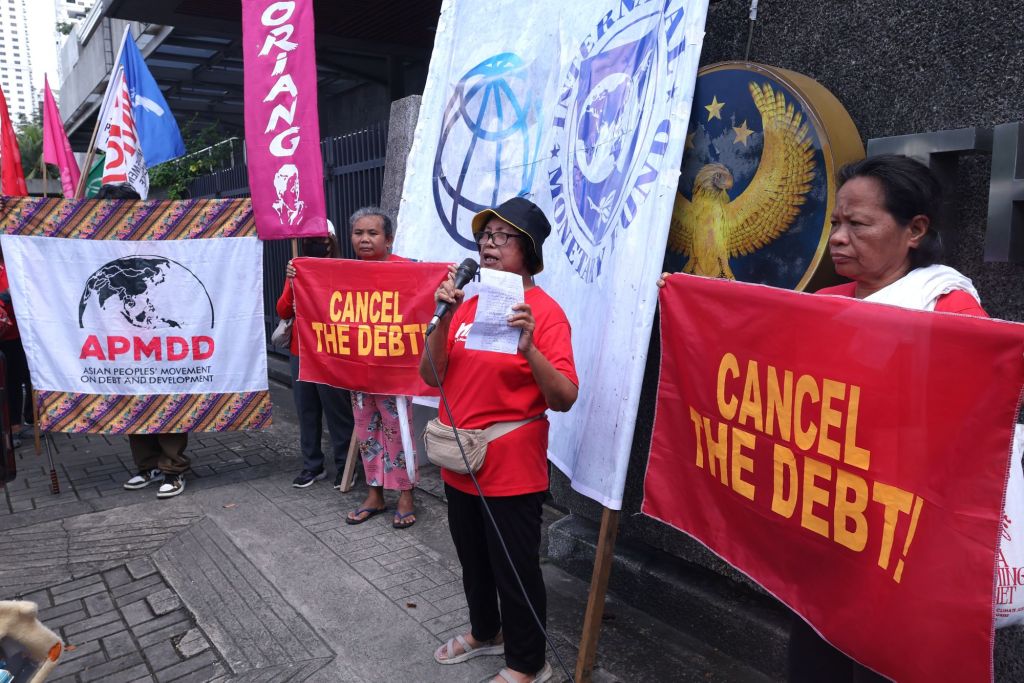
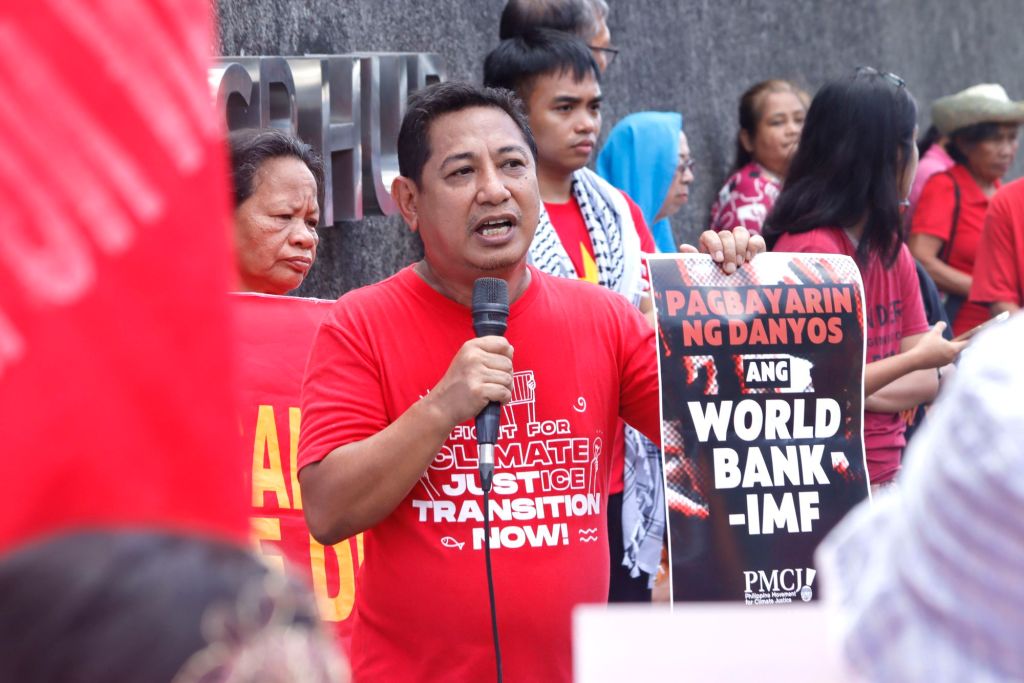
Ian Rivera, national coordinator of the Philippine Movement for Climate Justice: “In the Philippines, the World Bank financed the construction and expansion of various coal-fired power plants across the country. These coal plants have damaged, polluted, and killed surrounding communities and environments. Even the International Finance Corporation (IFC) Compliance Advisor Ombudsman recognized the environmental and safety risks their funded coal plants posed to communities.
The Philippine Movement for Climate Justice has extensively documented the situation of communities near World Bank-IFC-funded coal plants, which have significantly impacted the environment and community health and damaged the livelihoods of people in the area. We must phase out these remaining coal plants immediately and replace them with cleaner, more sustainable, democratically owned renewable energy. Energy systems must be democratic and controlled by the people, not corporations that decide which deadly fossil fuel is more profitable.”
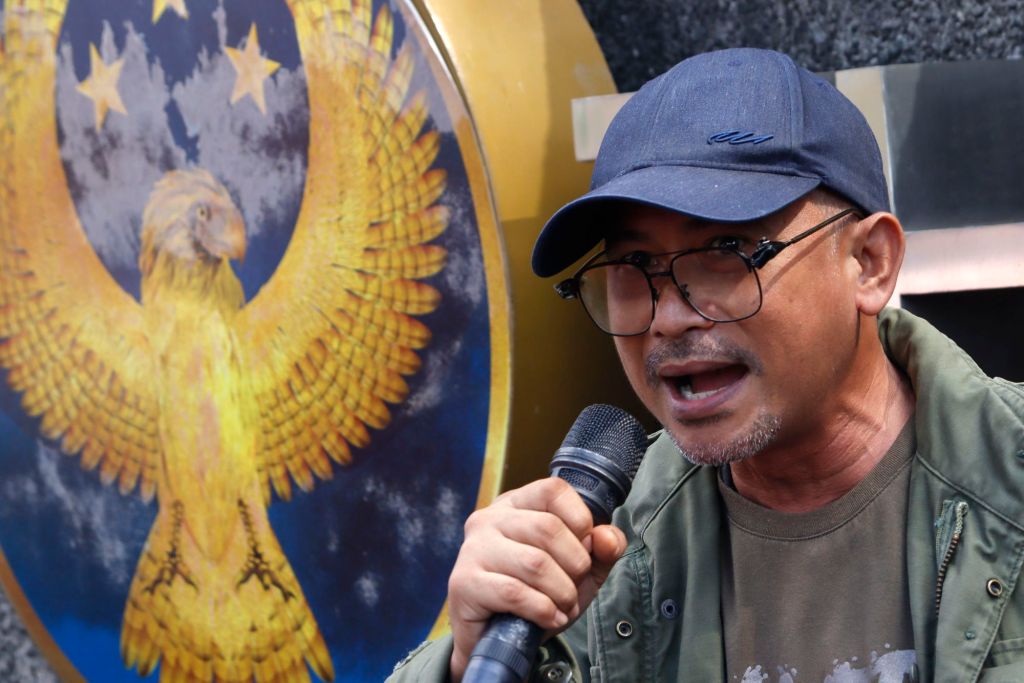
Luke Espiritu, president of Bukluran ng Manggagawang Pilipino: “The privatization of public services has caused serious economic harm to Filipinos. The country’s privatized energy sector has continually abused its control over energy services. Oligarchs control the generation, transmission, and distribution of electricity. This, along with investments in fossil fuels like fossil gas, has made Philippine electricity rates among the highest in Southeast Asia.
If the World Bank and the IMF are serious in their commitment to helping developing countries, they must cancel the debts that mercilessly force people to pay for their deaths and the destruction of their communities. The damage they have done to developing countries like the Philippines is immeasurable, and they must be held accountable and deliver the reparations our people deserve.”
(Photos by Elmer Valenzuela/Mata: Asia Press Photo)


Leave a Reply