
LAS PIÑAS CITY — On any other Saturday, the tricycle terminal at the edge of the barangay is a blur of noise. Engines idle. Sidecars rattle with a handwritten sign: “P35 – P45” — the drivers’ self-regulated fare for navigating the tight, nameless capillaries of the village.
Last Saturday, the noise paused.
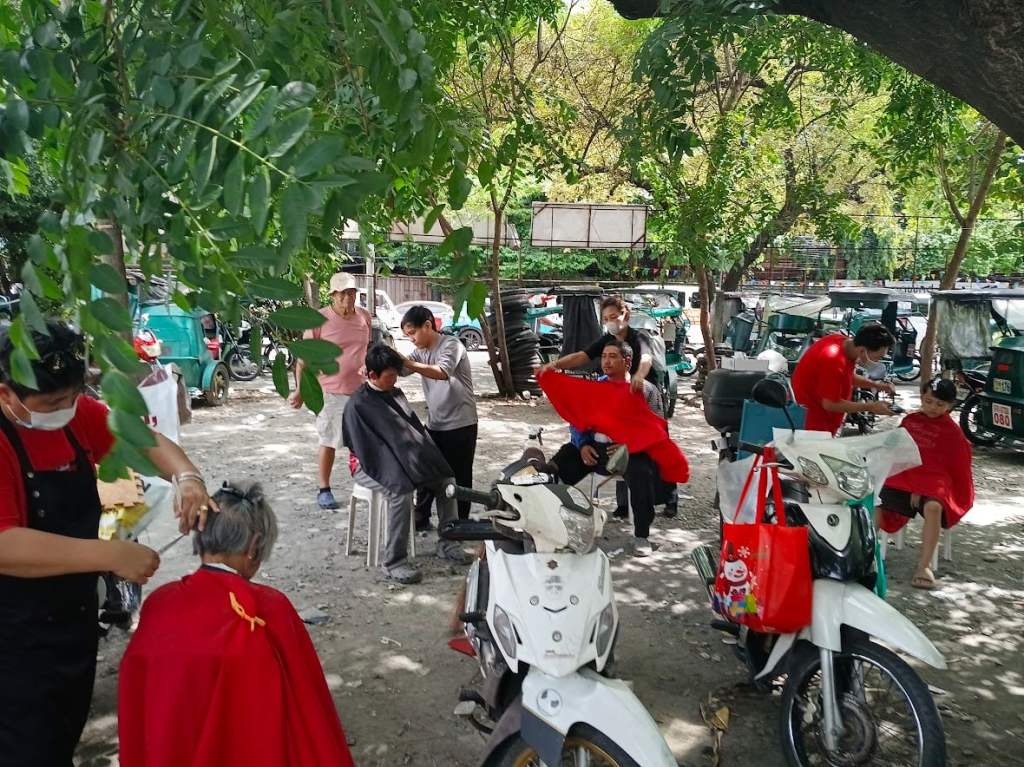
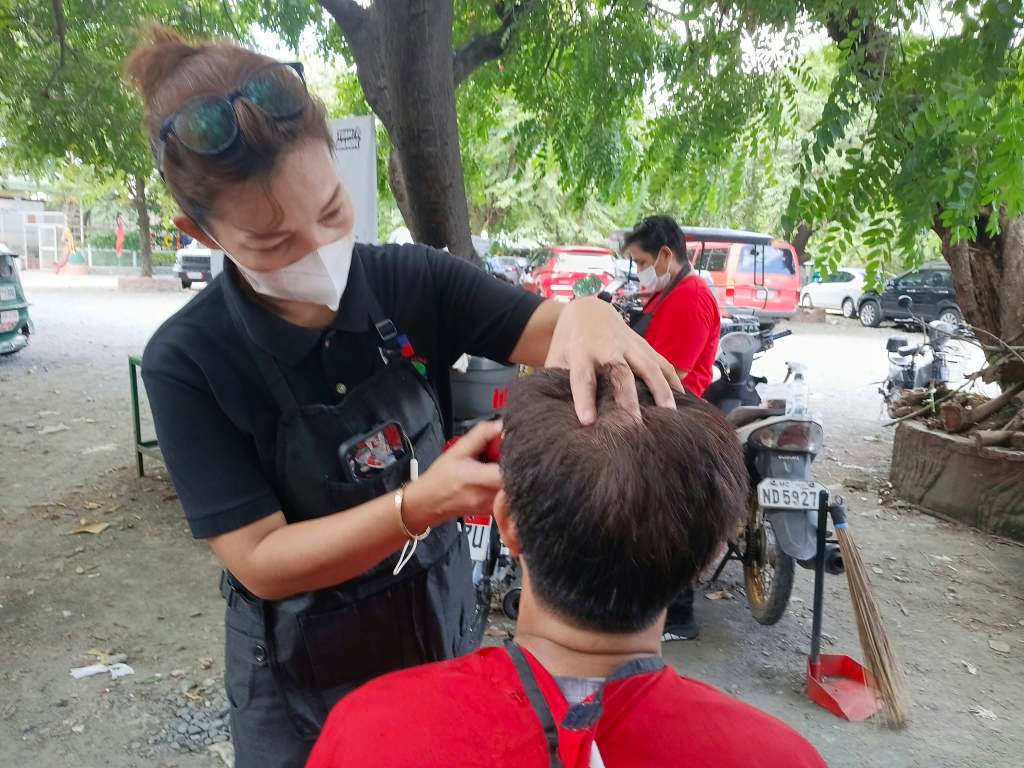
Under the dappled shade of acacia trees, stylists from Reyes Haircutters, unmistakable in their bright red uniforms, turned the dusty pavement into an open-air salon. There was no barber chair. A motorcycle saddle became a workstation, carefully balancing professional clippers, combs, and a spray bottle. The tools of a formal trade, adapted to the grit of the street.
It was a meeting of two essential economies.
For the tricycle driver, the journey is external and daily — short trips that keep the barangay moving for P35 to P45. For the barber, the journey is internal and cyclical — a renewal that traditionally costs P100 to P200, grooming a person until the next cut.
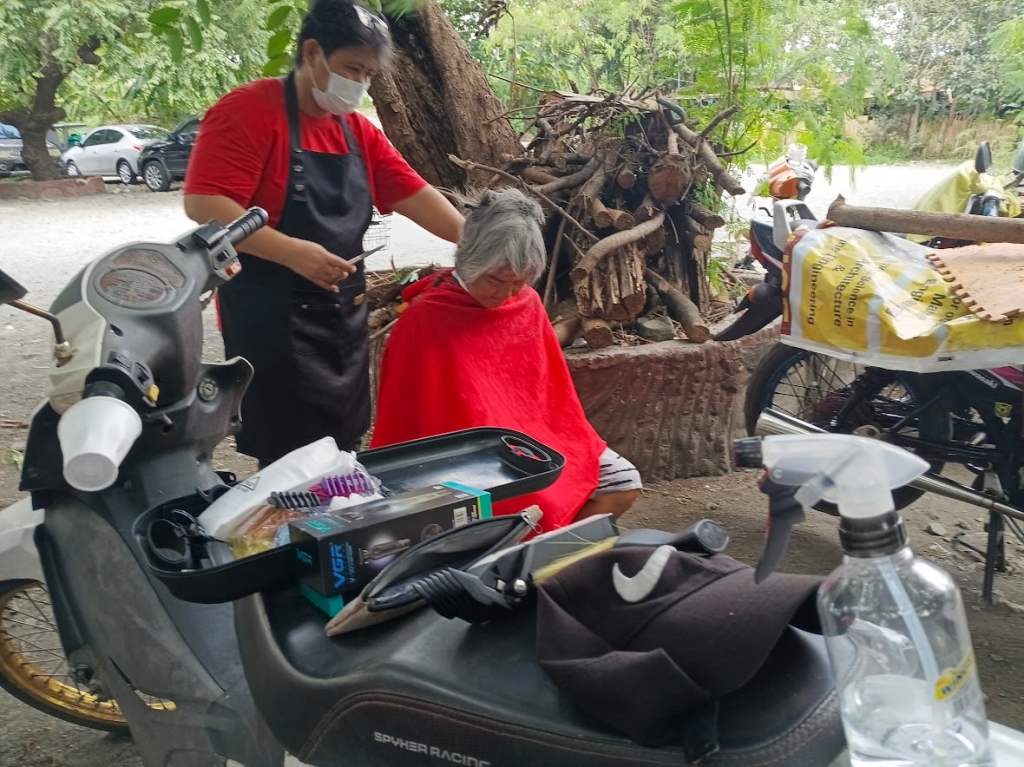
By waiving their fee for the day, Reyes Haircutters bridged that economic gap. The haircut, usually an unregulated luxury for a driver after a day of boundary, became free. It was not charity, but recognition — an act of respect for the men who hustle to keep the village moving.
And in the Philippines, a gupit is rarely just a transaction.
What started as a line of waiting drivers soon became something else. As older drivers surrendered their personal space to the sharp tools of a stranger, the quiet dissolved. The terminal became a plaza.
This is pakikipagkapwa-tao in its most literal form — shared humanity in the intimacy of a blade near skin.
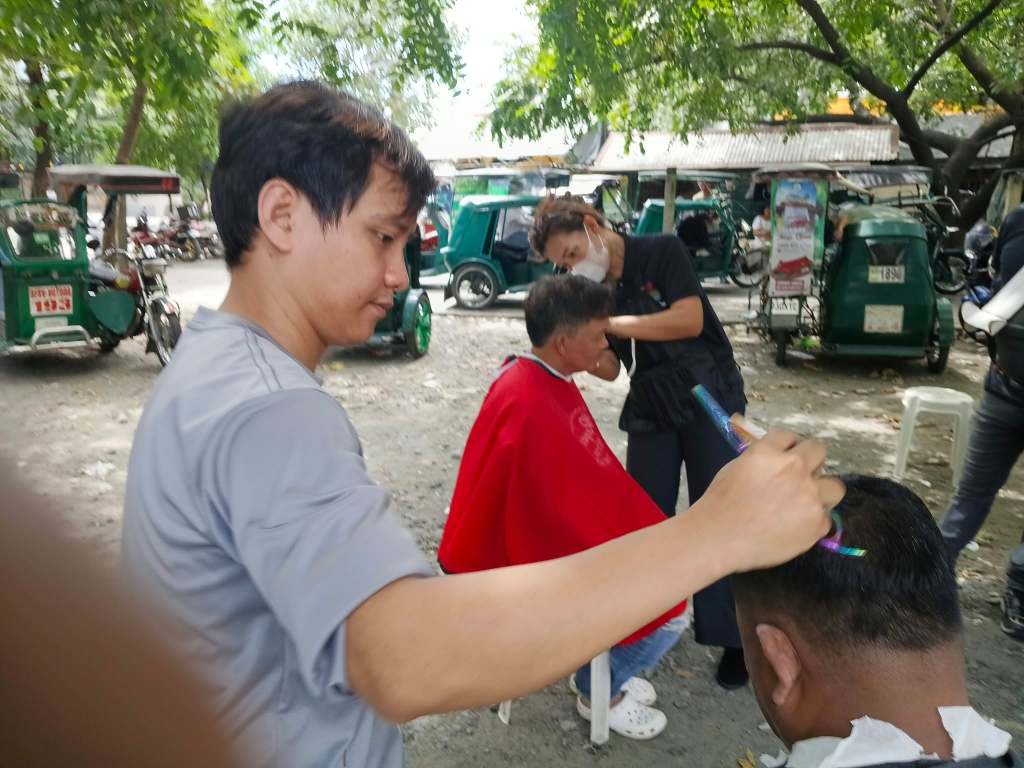
The air filled with kwentuhan. Strangers mapped out provincial roots — “Saan ka sa probinsya?” — traded passenger stories, and shared the neighborhood news that no social media feed can capture. A driver who had just had his faded hair trimmed became the next storyteller, still covered in a barber’s cape.
One of the barbers, Arlene Angeles, 50, said she had been working since 2006 with Reyes Cutters and they had rendered free haircuts as giving back to communities.
She said her Father was also a barber and was the personal hair cutter of the then Pasay City Mayor Pablo Cuneta.
Behind them, a tarpaulin flapped in the wind: a local zero-waste campaign banner. The backdrop was accidental, but fitting. An unscripted intervention about care — for the community, for the place itself.
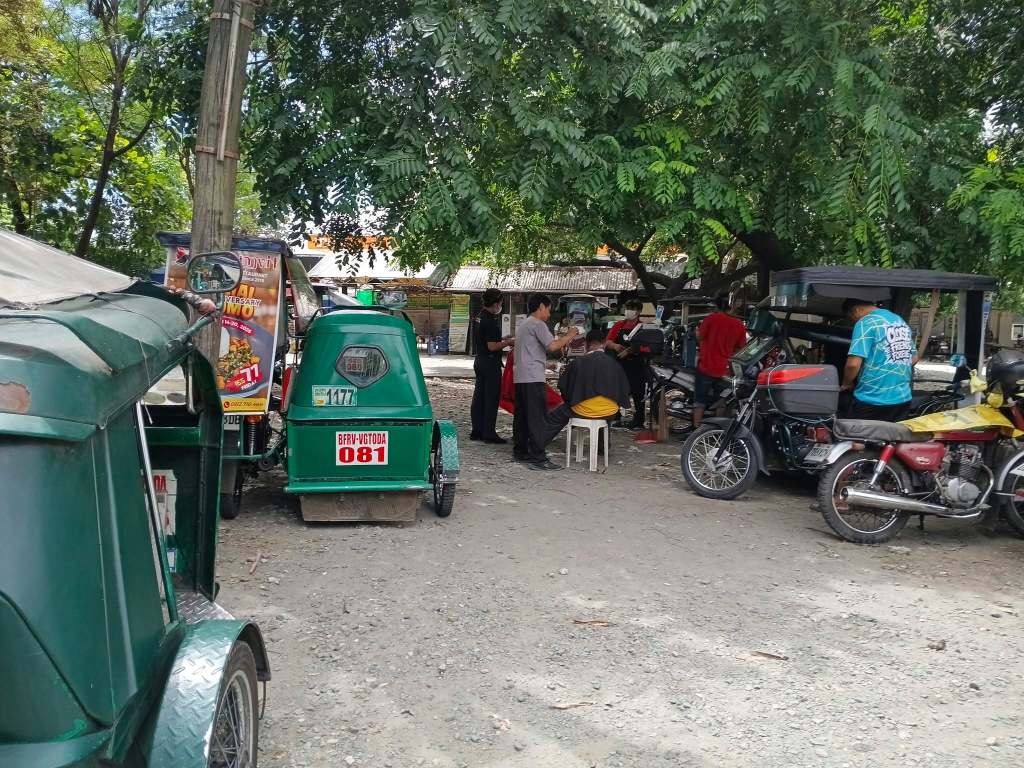
Metro Manila is often described as a city trying to turn itself into an anonymous grid of condos and highways. What happened in that Las Piñas terminal argues otherwise.
No permit was announced. No stage was built. All it took was a row of red uniforms, a motorcycle seat turned into a counter, and a willingness to stop.
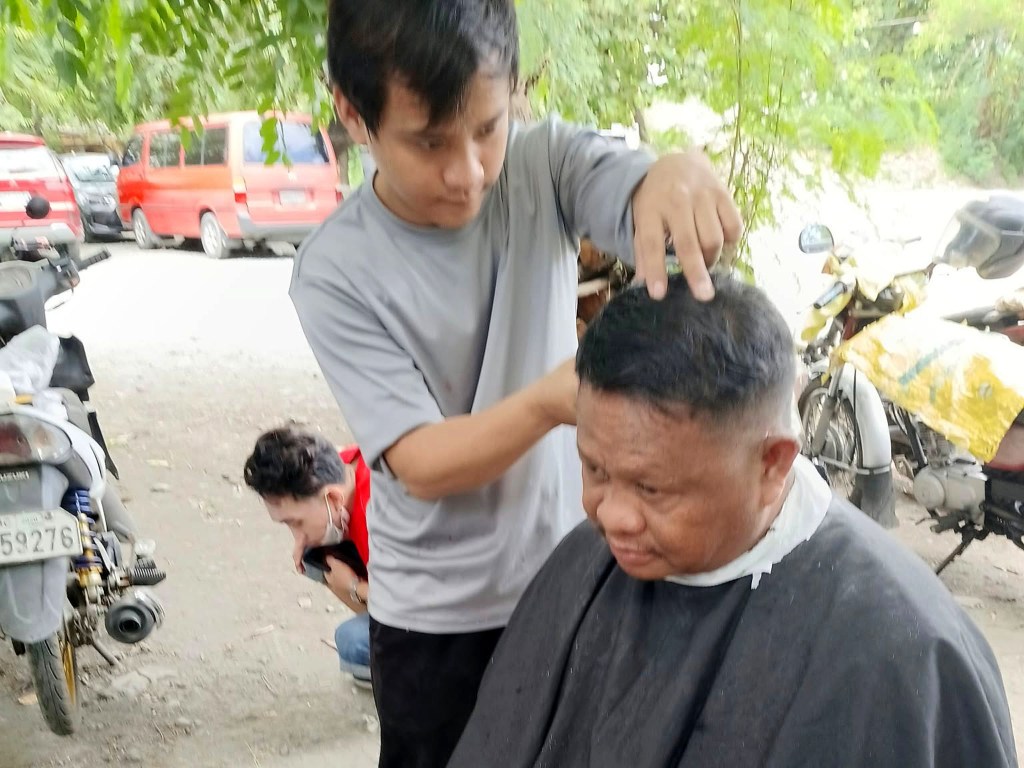
It is a reminder that a true sense of place is not sustained by concrete. It is sustained by the willingness to pause on the pavement, and care for the people right outside.
(Text and photos Joel Mataro/Mata: Asia Press Photo)


Leave a Reply